
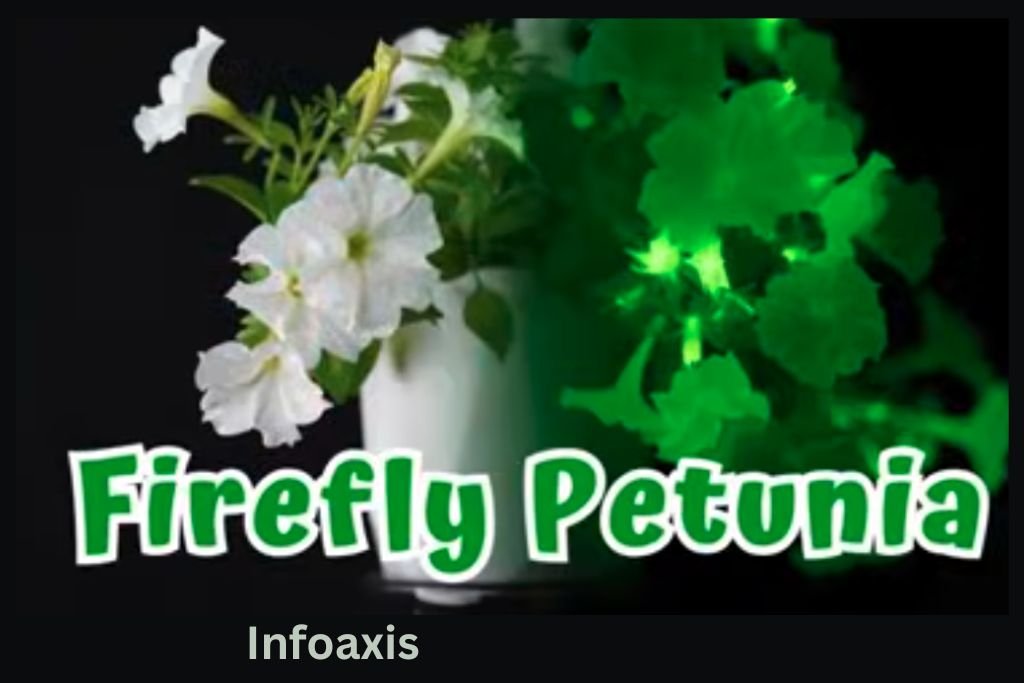
The firefly petunia is one of the most fascinating innovations in modern plant science. This remarkable plant looks like a typical ornamental flower during the day, but at night it emits a soft natural glow similar to the light produced by fireflies. The glowing effect is not artificial or powered by electricity; instead, it is created through natural bioluminescent processes engineered into the plant.
Scientists developed the firefly petunia by combining traditional horticulture with advanced biotechnology. The result is a decorative flowering plant that produces light on its own, making it one of the most unique ornamental plants ever introduced.
In recent years, glowing plants have captured global attention because they represent a new direction in both gardening and synthetic biology. The firefly petunia demonstrates how living organisms can be engineered to perform entirely new functions while still maintaining their natural growth and beauty.
What Is a Firefly Petunia?
The firefly petunia is a genetically modified variety of petunia that produces a visible glow in dark environments. During daylight hours, the plant appears similar to common petunia varieties with delicate white or pale flowers. When night falls, the plant begins to emit a subtle greenish light that can be seen without any external light source.
Unlike decorative glow-in-the-dark products that require light exposure beforehand, the firefly petunia continuously produces light through internal biochemical reactions. This means the glow is generated naturally by the plant itself.
Key Characteristics
- Produces a natural bioluminescent glow
- Looks like a regular petunia in daylight
- Emits soft green light at night
- Grows well in containers, hanging baskets, and garden beds
- Requires similar care to traditional petunia plants
The glowing effect is most noticeable in complete darkness, where the plant’s gentle light becomes clearly visible.
The Science Behind the Glow
The glow of the firefly petunia comes from bioluminescence, a natural process found in many organisms such as fireflies, jellyfish, and certain fungi.
Bioluminescence occurs when special molecules react with oxygen and enzymes to produce light. Scientists inserted genes responsible for this process into the petunia plant, enabling it to produce light in a similar way.
How the Bioluminescent Reaction Works
Biochemical Components
The glowing reaction involves several key molecules:
- Luciferin – the light-producing compound
- Luciferase – an enzyme that triggers the reaction
- Oxygen – required for the chemical reaction
- Energy molecules inside plant cells
When these components interact, energy is released in the form of visible light.
Why the Glow Appears Green
Most plant bioluminescence appears green because that wavelength of light is produced during the chemical reaction. Green light is also easier for the human eye to detect in darkness.
The Development of Glowing Plants
The concept of glowing plants has fascinated scientists for decades. Early experiments focused on inserting firefly genes into plants to produce faint light signals used for research.
Early Research
Initial experiments aimed to create plants that could glow as indicators of biological activity. These glowing signals helped researchers observe how plants respond to environmental changes.
Advances in Biotechnology
Later breakthroughs allowed scientists to create plants that glow continuously rather than briefly. Researchers discovered that certain mushrooms naturally contain complete bioluminescent systems, making them ideal sources for plant engineering.
Commercial Introduction
After years of research and testing, the firefly petunia became the first glowing ornamental plant released for general cultivation. Its introduction marked a milestone in the combination of plant science and biotechnology.
Appearance and Visual Features
Daytime Appearance
During the day, the firefly petunia looks very similar to traditional petunias. It typically produces:
- Small trumpet-shaped flowers
- Soft white or pale petals
- Green foliage
- Compact, bushy growth
Because the plant looks normal during daylight, it blends well with other garden flowers.
Nighttime Glow
At night, the plant begins to emit a gentle glow that appears most clearly in dark environments.
The glow is:
- Soft rather than bright
- Greenish in color
- Most visible on flower buds and stems
While the light is not strong enough to illuminate a room, it creates a beautiful glowing effect in gardens or indoor spaces.
Where the Glow Is Strongest
The brightness of the firefly petunia is not uniform throughout the plant. Some areas naturally glow more intensely.
Flower Buds
Young buds often glow brighter because they have higher metabolic activity.
Growing Tips
The tips of stems where new growth occurs also show strong bioluminescence.
Leaf Veins
Sometimes faint glowing lines can appear along leaf veins where biochemical activity is active.
How Firefly Petunia Is Different From Regular Petunias
Although the firefly petunia belongs to the same plant family as standard petunias, it has several unique features.
Unique Traits
- Natural glowing ability
- Genetically engineered bioluminescent system
- Increased scientific interest in ornamental plants
Similar Traits
Despite its glow, it still shares many characteristics with traditional petunias:
- Similar growth patterns
- Comparable watering needs
- Familiar flower shapes
This combination of familiarity and novelty makes the plant appealing to gardeners and science enthusiasts alike.
Growing Conditions for Firefly Petunia
The firefly petunia grows best in conditions similar to those required by regular petunias.
Sunlight Requirements
Petunias generally prefer bright sunlight. For healthy growth:
- Provide 6–8 hours of sunlight daily
- Place plants in sunny garden beds or bright windows
Soil Conditions
Well-draining soil is essential. Ideal soil should be:
- Light and loose
- Rich in organic matter
- Able to drain excess water quickly
Watering Needs
Consistent watering helps maintain healthy growth.
- Keep soil slightly moist
- Avoid waterlogging
- Allow the top layer of soil to dry slightly between watering
Fertilization
Petunias benefit from periodic fertilization.
- Use balanced fertilizer
- Apply during active growth periods
- Avoid excessive fertilization
Healthy plants tend to produce stronger glowing effects.
Popular Uses in Gardens and Homes
The firefly petunia can be used in a variety of decorative settings.
Night Gardens
Because the plant glows naturally, it is perfect for gardens designed to be enjoyed at night.
Indoor Decoration
When placed indoors, the glowing flowers can create a unique nighttime display.
Hanging Baskets
Hanging baskets allow the glow to be viewed from multiple angles.
Pathway Gardens
Some gardeners place glowing plants near pathways or seating areas to enhance nighttime ambiance.
The Future of Glowing Plants
The firefly petunia represents only the beginning of what biotechnology may achieve in horticulture.
Potential Future Applications
Scientists are exploring possibilities such as:
- Plants that glow brighter
- Bioluminescent trees for outdoor lighting
- Decorative glowing landscapes
Although these ideas are still experimental, the firefly petunia shows that living light sources are now possible.
Environmental Possibilities
In the future, glowing plants could potentially reduce energy use in certain environments if they are developed to produce stronger light.
Why Firefly Petunia Is Important
The introduction of the firefly petunia highlights how scientific innovation can transform traditional gardening.
Scientific Significance
The plant demonstrates that advanced genetic engineering can be applied to ornamental plants in safe and practical ways.
Cultural Impact
Glowing plants have captured the imagination of gardeners, scientists, and the general public because they combine natural beauty with cutting-edge science.
Inspiration for Future Research
The success of the firefly petunia encourages further exploration into new types of engineered plants.
Read More : ChromiumFX Explained
Read More : Home Upgrading Mintpalment





Leave a Reply