
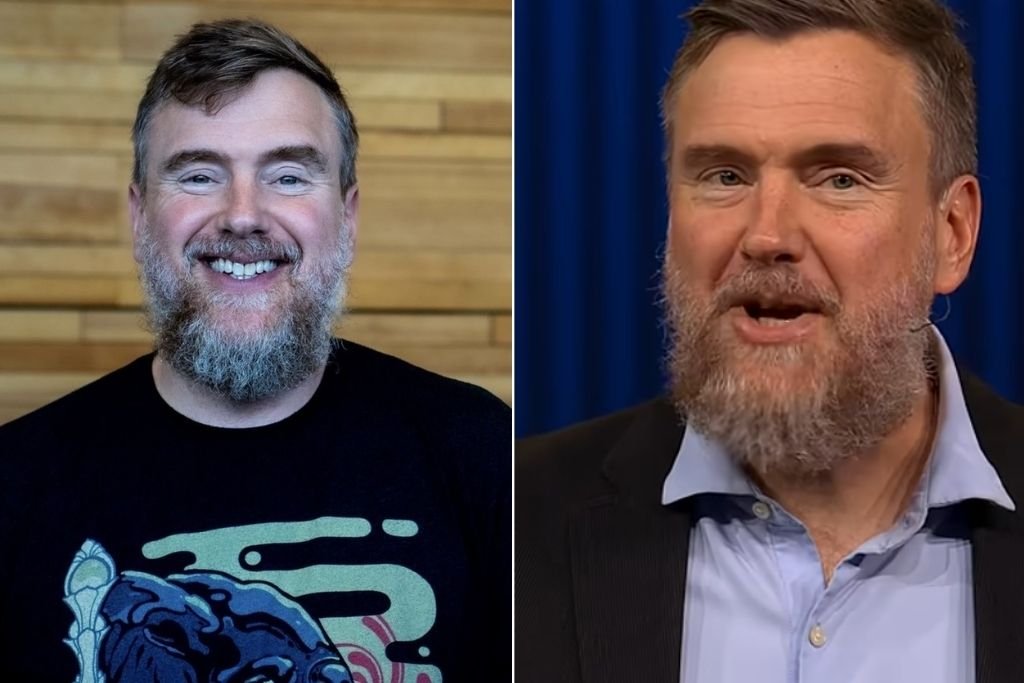
A Voice That Refuses to Be Silenced
On a college campus buzzing with debate, protest, and ideological clashes, there’s often one invisible thread connecting it all: the question of who gets to speak—and who doesn’t. For decades, one man has made it his mission to defend that thread, even when it frays under pressure.
Greg Lukianoff isn’t a politician, a celebrity pundit, or a culture warrior in the traditional sense. Yet his influence stretches across courtrooms, universities, and the broader cultural battlefield where ideas collide. His work sits at the uneasy intersection of law, psychology, politics, and culture—making him one of the most consequential voices in the modern free speech debate.
This is not just a story about a man. It’s a story about an idea: that free expression, even when uncomfortable, is essential to a functioning society.
The Man Behind the Mission
Born in 1974 in New York City, Greg Lukianoff grew up in an environment shaped by intellectual curiosity and cultural diversity. His academic path eventually led him into law, but his real calling emerged when he began confronting the growing tension between institutional authority and individual rights.
As the longtime president of the Foundation for Individual Rights and Expression, Lukianoff has spent years defending students and faculty members whose speech rights were threatened. FIRE, under his leadership, became a major force in exposing censorship, restrictive speech codes, and administrative overreach on campuses.
But Lukianoff’s journey hasn’t been purely professional. He has spoken openly about his struggles with mental health, particularly anxiety and depression—experiences that later shaped his writing and worldview. This personal dimension adds depth to his work, especially when discussing the psychological impact of modern culture on younger generations.
Greg Lukianoff’s Political Views: Beyond Left and Right
Trying to place Greg Lukianoff neatly into a political box is like trying to pin down a moving target. He doesn’t fit comfortably within traditional partisan labels—and that’s by design.
At his core, Lukianoff is a civil libertarian. His central belief is simple but powerful: freedom of speech must be protected regardless of who is speaking or what they are saying.
He has criticized both progressive and conservative movements when they attempt to silence opposing views. On one hand, he has pushed back against campus speech restrictions often associated with left-leaning institutions. On the other, he has also warned about authoritarian tendencies from the political right.
This ideological independence often places him in a unique—and sometimes uncomfortable—position. Supporters see him as principled and consistent. Critics, depending on their perspective, may see him as enabling the “wrong” side.
But Lukianoff’s argument remains consistent:
Free speech is not a partisan tool—it is a foundational principle.
Political Party: A Deliberate Distance
Unlike many public intellectuals, Lukianoff has not publicly aligned himself with any specific political party. This is not an oversight; it’s a deliberate choice.
His work through FIRE emphasizes nonpartisanship, focusing on defending rights rather than promoting policies tied to any one ideology. This neutrality has helped him maintain credibility across political divides, even as debates grow increasingly polarized.
In a time when nearly every public figure is expected to “pick a side,” Lukianoff’s refusal to do so stands out. It reinforces his broader message: that the rules of free expression must apply equally, regardless of political affiliation.
A Life Beyond the Spotlight: Wife and Family
Behind the public figure is a private life that has seen its own changes and challenges. Lukianoff married Michelle LaBlanc in 2012, and the couple had two sons together. Their relationship, like many, evolved over time, and they eventually divorced in 2025.
While Lukianoff tends to keep his personal life relatively low-profile, it’s clear that his experiences as a husband and father have influenced his thinking—particularly when writing about younger generations and the environments shaping them.
His work often reflects a concern not just for abstract freedoms, but for the real-world consequences those freedoms (or their absence) have on people’s lives.
Religion and Personal Beliefs
Greg Lukianoff has not publicly identified with any specific religious tradition. His work rarely engages directly with religion, focusing instead on legal principles, cultural trends, and psychological insights.
That said, his philosophy carries a kind of moral clarity rooted in Enlightenment values—reason, open inquiry, and individual liberty. These principles often overlap with broader ethical frameworks, even if they are not explicitly religious.
Books That Sparked a Cultural Conversation
If Lukianoff’s legal work laid the foundation for his influence, his books brought his ideas into the mainstream.
The Coddling of the American Mind
Co-authored with Jonathan Haidt, this book became a cultural phenomenon. It explores how overprotection, both in parenting and education, may be contributing to rising anxiety and fragility among young people.
The book argues that shielding individuals from discomfort can ultimately make them less resilient—a provocative idea that sparked widespread debate.
The Canceling of the American Mind
Written with Rikki Schlott, this work dives into the rise of cancel culture. It examines how social pressure, institutional fear, and digital outrage can combine to suppress dissenting voices.
Rather than simply criticizing cancel culture, the book also offers strategies for resisting it—making it both a diagnosis and a call to action.
Unlearning Liberty
This earlier work is a deep dive into campus censorship. It presents real cases where students and faculty faced punishment for expressing controversial ideas.
The book helped establish Lukianoff as a leading authority on free speech issues in higher education.
Freedom from Speech
A satirical piece, this book flips the free speech debate on its head by imagining a world where speech itself is treated as harmful.
Through humor, Lukianoff exposes the dangers of overregulation and the absurdity of certain censorship arguments.
Greg Lukianoff on X (Twitter): A Digital Battleground
On X (formerly Twitter), Lukianoff operates in a space that perfectly reflects the tensions he writes about. His account, often active and direct, engages with real-time debates on free speech, campus controversies, and cultural shifts.
Unlike many who use social media for branding or performance, Lukianoff uses it as an extension of his advocacy. He shares legal insights, responds to critics, and highlights cases involving speech rights.
The platform itself—with its mix of dialogue, outrage, and amplification—serves as a living example of the challenges he often discusses.
Substack: A Platform for Deeper Thought
While X allows for immediacy, Substack provides Lukianoff with space for depth. His writing on the platform often explores complex issues in a more nuanced and reflective way.
Here, he moves beyond headlines and hot takes, offering detailed analysis of legal cases, cultural trends, and philosophical questions. It’s a space where his voice becomes less reactive and more contemplative.
Substack has also allowed him to reach an audience that values long-form thinking—something increasingly rare in today’s fast-paced media environment.
Greg Lukianoff on Reddit: A Divided Audience
Reddit discussions about Lukianoff reveal just how polarizing his work can be.
Supporters often praise him as a defender of fundamental rights, someone willing to stand up against censorship regardless of the source. They see his work as essential in preserving open dialogue.
Critics, however, sometimes argue that his focus on free speech overlooks the harm certain types of speech can cause. Others perceive his arguments as aligning too closely with particular political narratives, even if unintentionally.
This divide reflects a broader cultural tension:
Is free speech an absolute good, or should it be balanced against other concerns?
Lukianoff’s answer is clear. Reddit’s response is anything but.
The Bigger Picture: Why Greg Lukianoff Matters
In an era defined by rapid change, ideological conflict, and digital amplification, Lukianoff’s work feels more relevant than ever.
He is not just responding to isolated incidents of censorship. He is engaging with a deeper question:
What kind of society do we want to be?
A society that prioritizes comfort over truth may avoid conflict—but at the cost of progress. A society that embraces open dialogue, even when it’s messy, may be more resilient in the long run.
Lukianoff’s contribution lies in forcing us to confront this trade-off.
Conclusion: A Legacy Still Being Written
Greg Lukianoff’s story is far from over. As debates around free speech continue to evolve, so too will his role in shaping them.
Whether you agree with him or not, his work demands engagement. It challenges assumptions, provokes discussion, and pushes boundaries—exactly what free speech is meant to do.
For readers seeking deeper insights into influential thinkers and cultural debates, platforms like Infoaxis continue to explore voices like Lukianoff—voices that refuse to stay silent in a world that often demands it.
Frequently Asked Questions (FAQs)
Who is Greg Lukianoff?
Greg Lukianoff is an American lawyer, author, and president of FIRE, known for his work defending free speech and civil liberties.
What are Greg Lukianoff’s political views?
He is a civil libertarian who supports strong free speech protections and critiques censorship from both political left and right.
Is Greg Lukianoff affiliated with any political party?
No, he has not publicly aligned himself with any political party and maintains a nonpartisan stance.
Who was Greg Lukianoff’s wife?
He was married to Michelle LaBlanc. The couple later divorced in 2025.
What are Greg Lukianoff’s most famous books?
His major works include The Coddling of the American Mind, The Canceling of the American Mind, Unlearning Liberty, and Freedom from Speech.
Is Greg Lukianoff active on social media?
Yes, he is active on X (Twitter), where he discusses free speech, legal issues, and cultural debates.
Does Greg Lukianoff write on Substack?
Yes, he uses Substack to publish long-form essays and deeper analysis on free speech and societal issues.
Why is Greg Lukianoff controversial on Reddit?
Because his strong defense of free speech sparks debate, with some praising him and others criticizing his positions.
Read More : Rikki Schlott
Read More : Ibrahim Chappelle







Leave a Reply