
Introduction
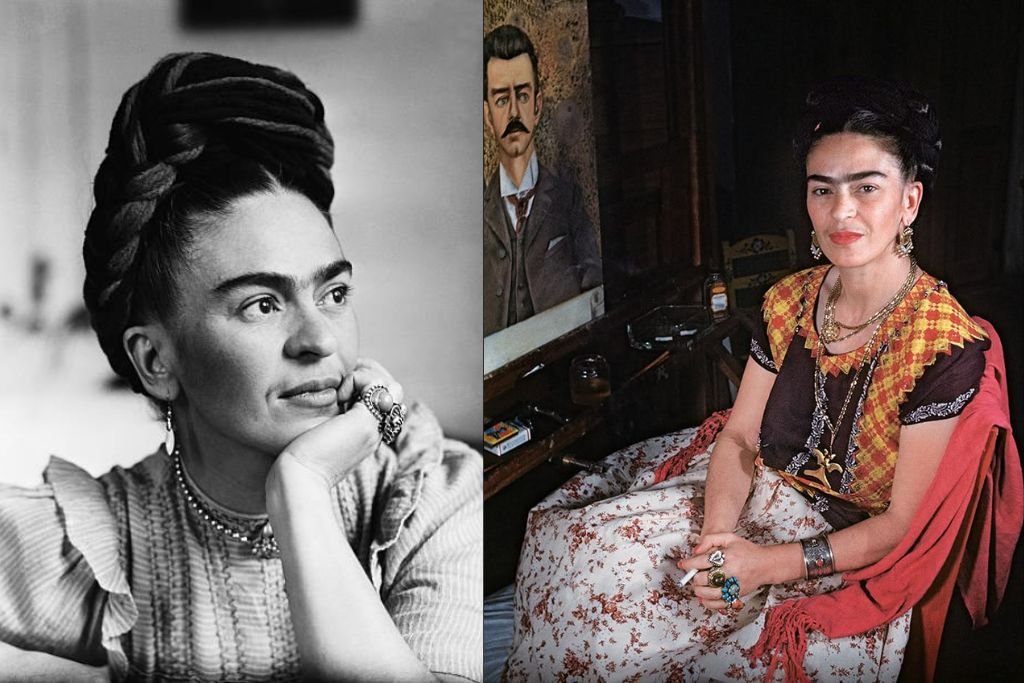
Few artists in history have transformed personal suffering into such powerful visual language as Frida Kahlo. Her life reads like a dramatic novel—filled with physical pain, emotional turbulence, passionate love, and unbreakable resilience. Yet beyond the myth, Kahlo remains one of the most important cultural figures of the 20th century, known for redefining identity, femininity, and artistic expression through deeply personal paintings.
Her work is not simply art—it is a mirror of her life, her body, and her inner world. From her childhood illness to a devastating accident and her complex marriage, every chapter of her life shaped the bold and unforgettable images she left behind.
Frida Kahlo Biography
Early Life
Frida Kahlo was born on July 6, 1907, in Coyoacán, a district of Mexico City known for its vibrant culture and artistic history. Growing up in a middle-class household, she was surrounded by both intellectual curiosity and emotional complexity. Her father, a German-Mexican photographer, encouraged her independence and creative thinking, while her mother maintained a more traditional and religious household.
From an early age, Frida showed signs of strong will and individuality. She was not interested in conforming to societal expectations and often challenged norms, something that later became central to her artistic identity.
Frida Kahlo Polio (Childhood Illness)
At the age of six, Frida Kahlo contracted polio, a disease that left her right leg thinner and weaker than the other. This physical difference made her self-conscious and subjected her to teasing by other children.
However, instead of breaking her spirit, this experience shaped her inner strength. She became more introspective, spending long periods in solitude. This isolation nurtured her imagination and emotional depth—qualities that later defined her artwork.
Education
Frida Kahlo was a bright and ambitious student. She gained admission to the prestigious National Preparatory School in Mexico City, where she was one of the few female students at the time. Initially, she aspired to become a doctor, showing a keen interest in science and biology.
Her education exposed her to intellectual circles and political discussions, helping shape her worldview. It was also during this time that she first encountered the renowned muralist Diego Rivera, although their relationship would begin later.
Frida Kahlo Accident (Turning Point)
In 1925, at the age of 18, Frida Kahlo’s life changed forever due to a tragic bus accident. The collision caused severe injuries, including a fractured spine, broken ribs, and internal damage. She was bedridden for months and endured multiple surgeries throughout her life.
During her recovery, Frida began painting as a way to cope with her pain and isolation. A special easel was created for her, and a mirror was placed above her bed so she could paint self-portraits. This moment marked the beginning of her artistic journey, turning tragedy into transformation.
Family Background
Frida’s family played a significant role in shaping her personality. Her father, Guillermo Kahlo, was deeply supportive and recognized her intellectual potential. He encouraged her independence and often took her along on his photography assignments.
Her mother, Matilde Calderón, had a more traditional outlook, which sometimes created tension within the household. Despite these differences, Frida maintained strong emotional ties with her family, particularly her sisters.
Relationship and Husband
Frida Kahlo’s relationship with Diego Rivera remains one of the most talked-about artistic partnerships in history. The two married in 1929, despite a significant age difference and contrasting personalities.
Their marriage was passionate but turbulent. Both had extramarital affairs, and their relationship was marked by intense emotional highs and lows. They divorced in 1939 but remarried a year later, unable to stay apart.
Despite the challenges, their bond was rooted in mutual respect for each other’s art. Rivera recognized Frida’s talent early on and supported her career, while Frida found both inspiration and pain in their relationship.
Career and Artistic Journey
Frida Kahlo’s artistic career was deeply personal. Unlike many artists of her time, she did not focus on abstract or purely aesthetic themes. Instead, she painted her own experiences—her pain, identity, and emotions.
Her work is often associated with surrealism, although she famously rejected the label, stating that she painted her reality, not dreams. Her paintings blend elements of Mexican folk art with symbolic imagery, creating a style that is both intimate and universal.
Over time, her work gained recognition in international art circles, leading to exhibitions in New York and Paris. Despite her growing fame, she remained deeply connected to her Mexican roots.
Frida Kahlo Paintings
Frida Kahlo’s paintings are instantly recognizable for their bold colors, symbolic depth, and emotional intensity. Many of her works are self-portraits, reflecting her physical and emotional struggles.
Some of her most notable paintings include “The Two Fridas,” “The Broken Column,” and “Self-Portrait with Thorn Necklace and Hummingbird.” These works explore themes such as identity, pain, love, and cultural heritage.
Her art often features elements like animals, nature, and traditional Mexican clothing, all used to express deeper meanings. Each painting tells a story, making her work both visually striking and emotionally powerful.
Frida Kahlo Movie
The life of Frida Kahlo reached a global audience through the film Frida, released in 2002. Starring Salma Hayek, the movie portrays her life, relationships, and artistic journey.
The film was widely praised for its storytelling and visual style, capturing the essence of Frida’s world. It introduced her story to a new generation and reinforced her status as a cultural icon.
Why is Frida Kahlo Important
Frida Kahlo’s importance goes far beyond her paintings. She is considered a symbol of resilience, individuality, and self-expression. Her work challenges traditional ideas about beauty, gender, and identity.
She openly explored themes that were rarely discussed at the time, including disability, miscarriage, and emotional trauma. Today, she is celebrated as a feminist icon and a voice for marginalized experiences.
Her influence extends into modern art, fashion, and popular culture, making her one of the most enduring figures in global history.
Achievements
Although Frida Kahlo gained widespread fame after her death, her achievements during her lifetime were significant. She held solo exhibitions in major cities and received recognition from prominent artists and critics.
In recent decades, her paintings have sold for record-breaking prices, and her image has become globally recognized. Museums dedicated to her life and work continue to attract millions of visitors.
Her legacy continues to grow, solidifying her place as one of the most influential artists of all time.
Later Life and Death
In her later years, Frida Kahlo’s health deteriorated significantly. She underwent numerous surgeries and eventually had her leg amputated due to complications.
Despite her physical suffering, she remained artistically active and emotionally strong. She passed away on July 13, 1954, at the age of 47.
Her death marked the end of a remarkable life, but her legacy has only grown stronger with time.
Frequently Asked Questions (FAQs)
When was Frida Kahlo born?
Frida Kahlo was born on July 6, 1907, in Coyoacán, Mexico.
What illness did Frida Kahlo have?
She suffered from polio during childhood and later endured lifelong complications from a severe accident.
Who was Frida Kahlo’s husband?
Her husband was Diego Rivera, a famous Mexican muralist.
What is Frida Kahlo famous for?
She is known for her deeply personal self-portraits and symbolic paintings.
What happened in Frida Kahlo’s accident?
A bus accident in 1925 caused severe injuries that changed her life and led her to painting.
Is there a movie about Frida Kahlo?
Yes, the 2002 film “Frida,” starring Salma Hayek, tells her life story.














Leave a Reply