
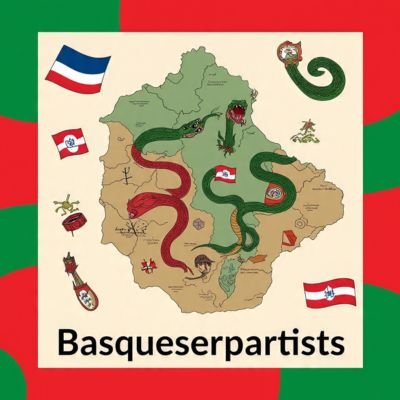
The term “Basqueserpartists” may initially seem unfamiliar to many, but it touches upon a rich tapestry of historical, political, and cultural developments associated with the Basque region of Spain and France. To fully understand this term, it is essential to explore both its historical roots in Basque separatism and its modern cultural reinterpretations. This article will provide a comprehensive look into the phenomenon, covering historical events, political movements, and contemporary artistic representations that the term has come to symbolize.
Historical Background of Basque Separatism
The Basque people, primarily residing in the northern regions of Spain and the southwestern parts of France, have long maintained a unique identity, language, and culture distinct from their neighbors. Over centuries, the desire to preserve this identity fostered various political movements advocating for autonomy or independence. The modern understanding of Basque separatism is heavily linked to the emergence of militant and political organizations in the 20th century.
The Rise of ETA
The most widely recognized Basque separatist group is ETA (Euskadi Ta Askatasuna), which translates to “Basque Homeland and Liberty.” Founded in 1959 by nationalist students, ETA emerged as a response to Francoist Spain, which suppressed regional identities, banned the Basque language, and curtailed local political autonomy.
ETA’s goals were ambitious: the establishment of a fully independent Basque state spanning the Basque-speaking regions of Spain and France. To achieve this, the group employed tactics including bombings, assassinations, kidnappings, and extortion, often targeting government officials, military personnel, and infrastructure. The conflict led to the deaths of over 850 people and left thousands more injured over the decades.
Although widely condemned for its violent methods, ETA remained a symbol of Basque resistance for many nationalists, particularly in its early years. The group’s influence began to wane after Spain transitioned to democracy and the Basque region gained limited self-governance. By 2011, ETA declared a permanent cessation of armed activities, followed by formal disarmament in 2017, and ultimately disbanded in 2018.
Basque Political Nationalism
While ETA represents the militant side of Basque separatism, political nationalism has long been a peaceful avenue for expressing Basque identity. The Basque Nationalist Party (PNV), founded in the late 19th century, aimed to achieve autonomy through political and electoral means rather than violence. Other parties, such as Eusko Alkartasuna, continued this tradition, focusing on cultural preservation and regional self-governance without endorsing violent tactics.
Another notable party, Batasuna, was linked to ETA’s political wing and sought to advance separatist goals politically. However, due to its association with violence, Batasuna was banned in Spain in 2003, illustrating the government’s firm stance against armed separatist movements.
The broader Basque conflict highlights a nuanced struggle: while some factions embraced armed resistance, others worked within the democratic framework to safeguard Basque culture, language, and regional autonomy.
Basqueserpartists in Modern Cultural Interpretation
Interestingly, in contemporary online and artistic discourse, the term “Basqueserpartists” has taken on a symbolic, non-political meaning in some blogs and creative spaces. Rather than referring to violent separatism, it is sometimes used to describe Basque artists and cultural figures who incorporate symbolic elements from Basque mythology into their work.
Serpent Symbolism in Basque Culture
The modern use of “Basqueserpartists” often involves serpent imagery, which holds deep cultural significance in Basque folklore. Serpents are frequently associated with themes of rebirth, transformation, wisdom, and protection. Artists inspired by these motifs are referred to in some online spaces as “Basqueserpartists,” emphasizing their role in preserving and reinterpreting Basque identity through creativity.
This artistic interpretation is distinct from the political and militant aspects of Basque separatism. It focuses on cultural expression, mythology, and identity, demonstrating how historical struggles and cultural symbols continue to influence contemporary Basque society in diverse ways.
Examples of Cultural Basqueserpartists
- Visual Artists – Painters and digital artists use serpent motifs to explore themes of Basque heritage and mythology.
- Sculptors and Installations – Public art projects sometimes integrate serpent forms to convey cultural resilience and transformation.
- Festivals and Performances – Cultural events may showcase serpentine symbolism in dance, music, or costumes, celebrating Basque mythology while fostering community identity.
By using the term “Basqueserpartists” in this context, blogs and creative outlets aim to highlight a unique fusion of heritage and modern artistic expression, rather than militant or political separatism.
Understanding the Dual Meaning
It is essential to recognize that “Basqueserpartists” can refer to two distinct concepts:
- Historical and Political Separatism – Connected to ETA and the broader Basque struggle for autonomy.
- Cultural and Artistic Identity – Modern reinterpretation by artists and cultural commentators using serpent symbolism to celebrate Basque heritage.
Understanding these dual meanings helps clarify potential confusion when encountering the term in historical, political, or cultural discussions. It also underscores the richness of Basque identity, which encompasses both struggles for political recognition and the preservation of unique cultural traditions.
The Evolution of Basque Identity
The journey from militant separatism to cultural expression illustrates the evolution of Basque identity. While the violent campaigns of ETA are a sobering chapter in Basque history, the flourishing of artistic Basqueserpartists represents a resilient, creative response to historical struggles. This dual narrative highlights the ongoing importance of heritage, symbolism, and cultural pride in shaping the modern Basque experience.
Conclusion
The term “Basqueserpartists” captures a fascinating interplay between history, politics, and culture. From the armed separatism of ETA to the peaceful, artistic reinterpretations of Basque mythology, the Basque region’s story is one of resilience, creativity, and identity. Today, whether referring to historical separatists or modern cultural advocates, Basqueserpartists continue to remind the world of the Basque people’s enduring spirit.
For more in-depth insights into cultural and historical phenomena, visit our blog Infoaxis, where we explore the intersection of history, art, and society.







Leave a Reply