
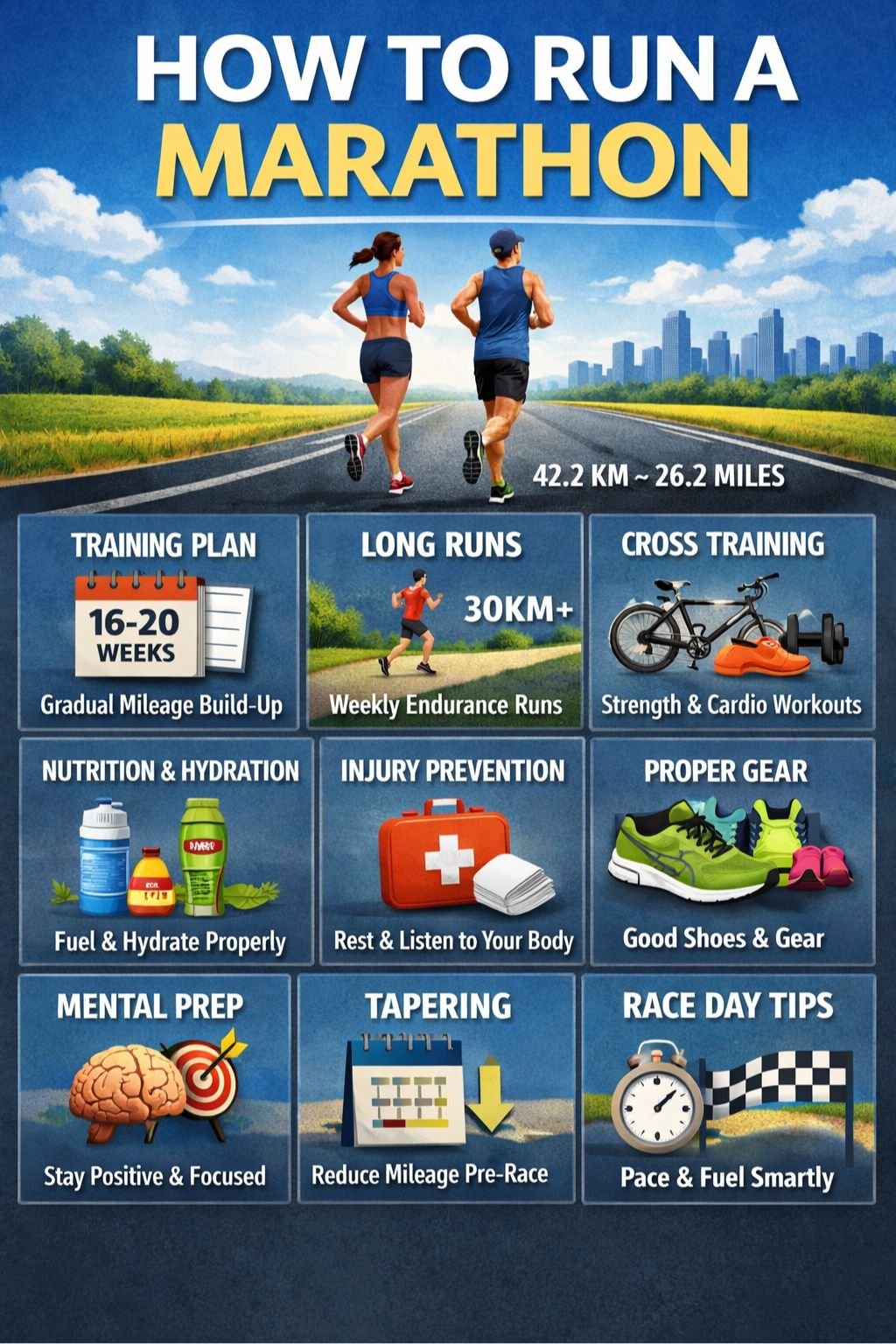
Running a marathon is one of the most rewarding challenges you can take on. Completing a 42.195 km (26.2 miles) race is a testament to your physical endurance, mental toughness, and preparation. Whether you are a first-time runner or an experienced athlete aiming for a personal best, understanding how to train, fuel, and pace yourself is key to a successful marathon. This guide will walk you step by step through everything you need to know to run a marathon safely and efficiently.
you May Also Read About: Noah Lee Ritter
Understanding the Marathon
A marathon is more than just a long run. It’s a test of both body and mind. Unlike shorter races, marathon running requires careful planning, consistent training, and strategic nutrition. Before signing up for a marathon, it is essential to understand the distance, the demands on your body, and what preparation it will take.
The average marathon training plan lasts 16–20 weeks. This gives your body enough time to gradually build endurance, adapt to longer distances, and minimize the risk of injuries. Beginners usually train 4 days a week, including one long run, one cross-training day, and rest days for recovery.
Step 1: Preparing for Training
Assess Your Fitness Level
Before starting, evaluate your current fitness. If you are new to running, it’s best to spend a few months building a base by running shorter distances 3–4 times a week. This base ensures your body is ready for marathon-specific training.
Set Realistic Goals
Your goals can vary depending on your experience. For first-timers, finishing the race safely should be the priority. Experienced runners may aim for a personal best or a specific time goal. Clear goals will guide your training intensity and pacing.
Step 2: Marathon Training Principles
Successful marathon training relies on several key principles:
1. Build Mileage Gradually
Increase your weekly running distance slowly, typically by no more than 10% per week. Sudden increases can lead to injuries like shin splints, plantar fasciitis, or stress fractures.
2. Long Runs Are Essential
Include one long run each week to condition your body for sustained effort. Start with shorter distances and gradually increase, peaking at 30–35 km (18–22 miles). Long runs are also the best opportunity to practice pacing and nutrition strategies.
3. Alternate Easy and Hard Runs
Balance your training with easy recovery runs and harder workouts such as intervals, tempo runs, or hill training. Hard workouts improve endurance, speed, and cardiovascular fitness, while easy runs allow your body to recover.
4. Cross-Training and Strength Work
Incorporate activities like cycling, swimming, or strength training to enhance overall fitness, reduce injury risk, and improve muscle endurance. Strengthening core and leg muscles is particularly beneficial for running efficiency.
5. Rest and Recovery
Rest days are just as important as training days. Your muscles repair and grow during rest, making recovery essential for performance and injury prevention.
Step 3: Nutrition and Hydration
Marathon running demands proper fueling. A balanced diet, hydration, and energy strategies are vital:
Daily Nutrition
Focus on carbohydrates for energy, protein for muscle repair, and healthy fats for long-term endurance. Include fruits, vegetables, whole grains, and lean proteins in your meals.
Hydration
Drink water consistently throughout the day. For runs over 90 minutes, sports drinks with electrolytes help prevent dehydration and maintain energy levels.
Fueling During Long Runs
Practice consuming energy gels, chews, or snacks during training. This prepares your stomach for race-day fueling and prevents “hitting the wall,” a common phenomenon caused by glycogen depletion.
Step 4: Choosing the Right Gear
The right gear can make or break your marathon experience:
- Running Shoes: Invest in quality shoes that match your gait and provide adequate support. Replace them after about 500 miles (800 km).
- Clothing: Use moisture-wicking clothes to prevent chafing and discomfort.
- Accessories: Hats, sunglasses, and GPS watches can improve comfort and pacing.
Always test gear and nutrition during training—never try new items on race day.
Step 5: Mental Preparation
Marathon running is as much a mental challenge as a physical one.
- Visualization: Imagine yourself completing the race and overcoming fatigue.
- Break the Race into Segments: Mentally divide the course into smaller sections to maintain focus.
- Positive Self-Talk: Encourage yourself during long runs to build mental resilience.
A strong mindset can help you push through difficult moments, especially in the later stages of the race.
Step 6: Tapering Before the Race
Tapering means gradually reducing your mileage in the final 2–3 weeks before the marathon. This allows your body to recover fully and store energy for race day. During this time, maintain intensity but reduce volume to avoid fatigue while keeping your muscles sharp.
Step 7: Race-Day Strategies
Pre-Race Preparation
- Eat a carb-rich breakfast 2–3 hours before the race.
- Arrive early to allow time for warm-up and stretching.
- Stick to your familiar pre-race routine.
During the Race
- Start at a comfortable pace; avoid starting too fast.
- Hydrate at regular intervals, using water or sports drinks.
- Consume energy gels or chews if your race exceeds 90 minutes.
Post-Race Recovery
- Stretch and cool down immediately after finishing.
- Rehydrate and consume a meal rich in protein and carbohydrates to aid muscle recovery.
- Allow a few days of rest or light activity before resuming training.
Conclusion
Running a marathon is a significant achievement that requires dedication, planning, and patience. By following a structured training plan, focusing on nutrition and hydration, choosing proper gear, and preparing mentally, you can successfully complete a marathon and enjoy the immense satisfaction of crossing the finish line.
Remember, the journey is as rewarding as the race itself. Every training run, long run, and preparation step brings you closer to achieving one of the most remarkable goals in endurance sports.













Leave a Reply