
Introduction
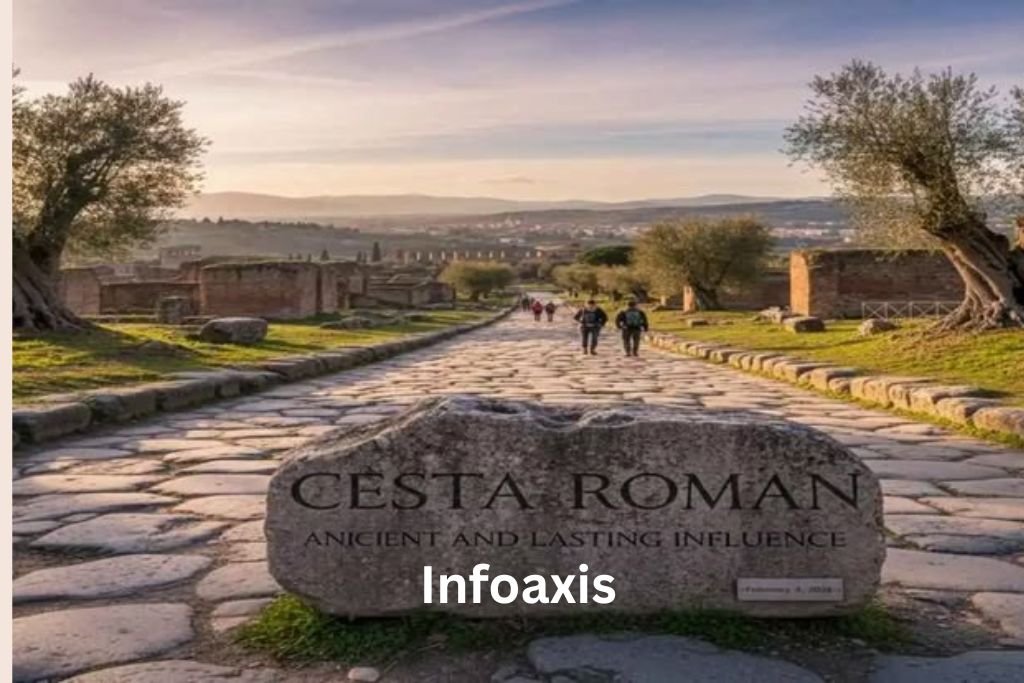
The term cesta roman is widely interpreted as “Roman road” or “Roman path,” referring to the legendary road network built by the civilization of Ancient Rome. These roads were not just physical pathways made of stone—they were the foundation of an empire that stretched across Europe, North Africa, and parts of Asia.
For centuries, historians, engineers, and travelers have studied Roman roads for their durability, design, and strategic brilliance. Even today, many modern highways follow the same routes laid down more than two thousand years ago. The concept of cesta roman represents more than infrastructure; it symbolizes connection, expansion, trade, culture, and legacy.
In this detailed article, we will explore the historical background, construction techniques, engineering mastery, cultural significance, and modern relevance of cesta roman, offering a complete understanding of why these ancient roads still matter today.
What Does “Cesta Roman” Mean?
The phrase “cesta roman” combines two words:
- Cesta – meaning road or path in several Slavic languages.
- Roman – relating to the Roman civilization.
Together, the term points to the vast network of roads built during the height of the Roman Empire. Although the original Latin term used by Romans was via, the idea behind cesta roman is universally understood as the structured and engineered road systems that shaped history.
The Birth of the Roman Road System
The Roman road system began around 312 BCE with the construction of the famous Via Appia, also known as the Appian Way. This road connected Rome to southern Italy and became the model for future Roman roads.
As the Roman Republic expanded into an empire, roads became a necessity. They allowed:
- Rapid movement of armies
- Efficient trade between regions
- Communication across provinces
- Political control over vast territories
By the height of the empire, Rome had built over 400,000 kilometers of roads, with around 80,000 kilometers paved with stone.
Engineering Brilliance Behind Cesta Roman
One of the reasons cesta roman remains legendary is its advanced engineering. Roman roads were built to last, and many sections are still visible today.
1. Layered Construction
Roman engineers followed a strict building process:
- Excavation – Digging a trench down to solid ground
- Foundation Layer (Statumen) – Large stones for stability
- Middle Layers (Rudus & Nucleus) – Gravel, crushed stones, and sand
- Surface Layer (Summum Dorsum) – Large, tightly fitted paving stones
The roads were slightly curved (cambered) to allow water drainage into side ditches, preventing flooding and erosion.
2. Straight-Line Precision
Roman roads were famous for their straight routes. Engineers prioritized direct paths, even if it meant cutting through hills or building bridges. This strategic straightness reduced travel time and strengthened military efficiency.
3. Milestones and Signage
Along the roads, stone milestones were placed at regular intervals. These displayed distances and the name of the emperor who commissioned repairs or construction. It was one of the earliest forms of structured road signage.
Famous Examples of Roman Roads
Via Appia
The Via Appia remains one of the most well-preserved Roman roads. Stretching from Rome to Brindisi, it became known as the “Queen of Roads.”
Via Aurelia
The Via Aurelia ran along the western coast of Italy and connected Rome with important northern regions.
Watling Street
In Roman Britain, Watling Street connected key settlements and played a major role in military campaigns.
These examples show how cesta roman extended across continents, influencing regions far beyond Italy.
Military Power and Strategic Importance
Roman roads were primarily built for military dominance. The empire needed fast deployment of troops to maintain control over distant territories.
Because of cesta roman:
- Armies could march 20–25 miles per day.
- Reinforcements reached borders quickly.
- Rebellions were suppressed efficiently.
- Trade routes were protected by military presence.
The phrase “All roads lead to Rome” reflects how the network was centered around the capital of the empire.
Economic and Cultural Impact
Beyond military use, cesta roman transformed commerce and daily life.
1. Boost to Trade
Merchants transported goods like:
- Olive oil
- Wine
- Grain
- Textiles
- Metals
This movement strengthened the Roman economy and connected diverse cultures.
2. Spread of Ideas and Culture
Roads allowed the exchange of:
- Language (Latin spread widely)
- Religion (including early Christianity)
- Art and architecture
- Legal systems
The Roman road network helped unify distant lands under one cultural and administrative system.
Durability: Why Roman Roads Still Exist
Many Roman roads remain visible today because of:
- Strong foundations
- High-quality materials
- Skilled craftsmanship
- Regular maintenance
Modern engineers still study Roman construction techniques to understand how ancient builders achieved such longevity without modern machinery.
In fact, parts of European road systems are built directly over ancient Roman routes, proving their continued relevance.
Cesta Roman in Modern Tourism
Today, many Roman roads are preserved as historical attractions. Tourists walk along ancient stone paths, experiencing history firsthand.
For example:
- The Via Appia in Italy is open for visitors.
- Roman road remains can be explored in Spain, France, Germany, and the UK.
These preserved paths serve as educational resources and cultural heritage sites, attracting historians and travelers from around the world.
Symbolic Meaning of Cesta Roman
Over time, cesta roman has taken on symbolic meaning beyond physical roads.
It represents:
- Discipline and structure
- Strategic planning
- Long-term vision
- Connectivity and unity
In literature and philosophy, the idea of a “Roman path” often symbolizes a strong, determined journey toward success or legacy.
Influence on Modern Infrastructure
Roman road principles influenced:
- Highway engineering
- Urban planning
- Drainage systems
- Milestone-based distance measurement
Even modern GPS-based navigation follows mapped routes that sometimes trace Roman alignments.
The Roman commitment to infrastructure shows how transportation shapes economic and political power.
Lessons from Cesta Roman
The concept of cesta roman teaches several timeless lessons:
- Infrastructure builds empires.
- Long-term planning creates lasting impact.
- Connectivity strengthens unity.
- Engineering excellence stands the test of time.
Modern societies continue to rely on transportation networks just as Rome once did.
Conclusion
Cesta roman is far more than an ancient road system. It is a symbol of Roman innovation, expansion, and unity. Built with precision and foresight, these roads connected continents, strengthened military power, boosted trade, and shaped civilization.
From the historic Ancient Rome to modern European highways, the legacy of Roman roads continues to influence infrastructure worldwide. Their durability and design remain a testament to human ingenuity.
If you are passionate about history, engineering, or cultural heritage, exploring the story of cesta roman offers valuable insights into how roads can shape the destiny of nations.
For more detailed historical and educational content like this, visit Infoaxis, where knowledge meets clarity and depth.
Read More :Piracy Warning Luxury Cruise Passengers
Read More :How to Run a Marathon







Leave a Reply