
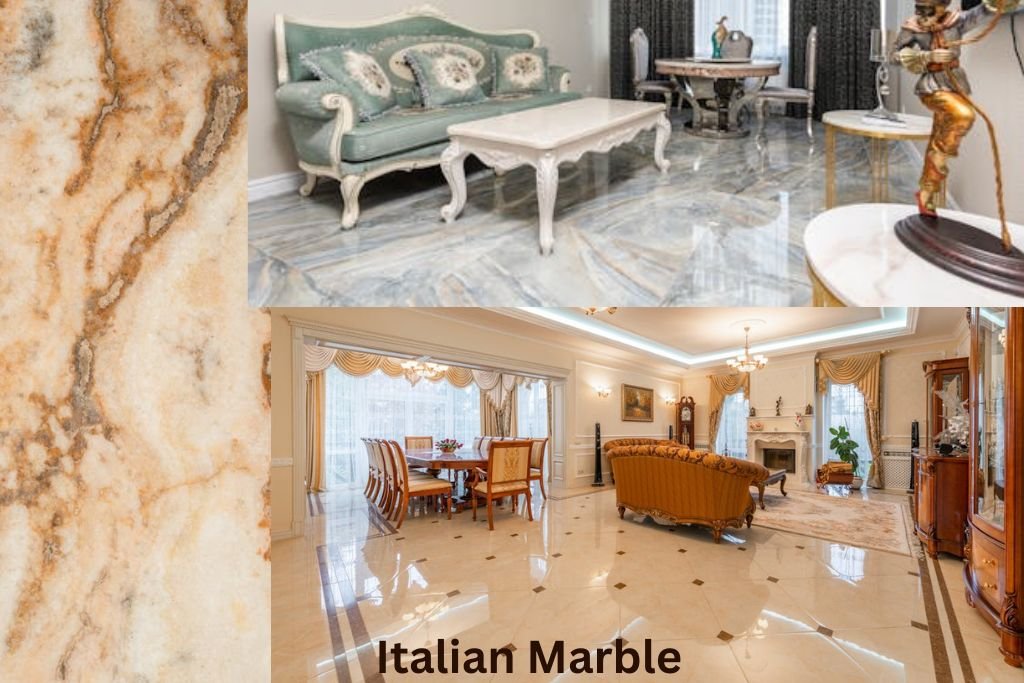
The first time you see true Italian marble, it doesn’t feel like stone. It feels alive.
Light slips across its surface like silk. Veins drift through its white body like frozen lightning. Stand close enough, and you begin to understand why emperors, artists, architects, and modern designers alike have fought to claim it. Italian marble is not just a building material—it is a story carved from mountains, sculpted by time, and perfected by human hands.
From the silent quarries of Tuscany to the grand cathedrals of Europe and the sleek kitchens of modern homes, Italian marble has shaped civilizations. Its beauty is not accidental. It is geological poetry, written over millions of years, then revealed by the courage of quarry workers and the vision of designers.
Let’s step into that story.
Where the Story Begins: The Mountains of Carrara
High in the Apuan Alps of Northern Tuscany lies Carrara, a name that has become synonymous with marble excellence. For more than 2,000 years, these mountains have yielded stone so luminous and refined that it became the material of choice for Roman emperors and Renaissance masters.
The Romans used Carrara marble to build monuments that still stand today. Michelangelo personally selected blocks from these quarries for his sculptures, including the legendary David. He believed the figure already existed inside the stone—he simply released it.
That is the magic of Italian marble. It doesn’t just support design; it inspires it.
What Makes Italian Marble So Special?
Many countries produce marble, but Italian marble holds a reputation that feels almost mythical. The difference lies in a combination of geology, history, craftsmanship, and rarity.
1. Purity and Color
Italian marble, especially varieties like Carrara and Calacatta, is known for its bright white base. The clarity of this white background allows the veining to stand out dramatically, creating natural artwork in every slab.
2. Unique Veining Patterns
No two slabs are identical. Veins can be soft and feathery or bold and dramatic. Some resemble delicate brushstrokes; others cut through the surface like lightning bolts.
3. Historical Prestige
When a material has been used for centuries in sculptures, palaces, and world-famous architecture, its reputation compounds. Italian marble carries cultural weight.
4. Craftsmanship Tradition
Italy’s stone industry has evolved with technology while preserving artisanal techniques. The finishing, cutting, and polishing processes are refined to perfection.
The Icons of Italian Marble
Italian marble isn’t a single type. It is a family of stones, each with personality and purpose.
Carrara Marble – The Timeless Classic
Carrara marble is perhaps the most widely recognized variety. Typically white to blue-grey with soft veining, it offers subtle elegance.
It has been used in:
- Roman architecture
- Renaissance sculptures
- Luxury bathrooms and countertops
- Hotel lobbies and commercial spaces
Carrara is often chosen when designers want understated sophistication rather than dramatic contrast.
Calacatta Marble – The Bold Aristocrat
If Carrara is refined, Calacatta is dramatic.
With a bright white base and thick, bold veins in gold or grey tones, Calacatta marble commands attention. It is rarer than Carrara and considered more luxurious.
Designers often use Calacatta for:
- Statement kitchen islands
- Feature walls
- High-end hospitality projects
- Luxury residences
Because it is quarried in smaller quantities, Calacatta carries higher exclusivity.
Statuario Marble – The Sculptor’s Dream
Statuario marble blends purity with striking contrast. It features a bright white background with distinct grey veining, often more pronounced than Carrara but more controlled than Calacatta.
Historically favored by sculptors, Statuario remains a premium choice for refined architectural statements.
From Quarry to Home: The Journey of Italian Marble
The journey begins in towering mountain faces, where skilled workers extract enormous blocks weighing several tons. Modern quarrying uses advanced wire-saw technology, but the challenge remains immense.
After extraction:
- Blocks are transported to processing facilities.
- They are cut into slabs using diamond wire saws.
- Surfaces are polished or honed.
- Slabs are inspected for quality and grading.
- Finally, they are shipped worldwide.
By the time a slab reaches a kitchen or lobby, it has traveled continents and passed through expert hands.
Why Designers Still Choose Italian Marble
In an era dominated by engineered materials and quartz alternatives, Italian marble remains irreplaceable. Why?
Natural Authenticity
Engineered surfaces can imitate marble—but they cannot replicate its organic unpredictability. Each slab tells a geological story millions of years in the making.
Light Reflection
Italian marble has a depth and translucency that interacts beautifully with light, giving interiors a soft glow.
Investment Value
Premium marble installations can elevate property value, particularly in luxury real estate markets.
Emotional Impact
There’s something psychological about marble. It communicates permanence, luxury, and legacy.
Maintenance: The Reality Behind the Beauty
Italian marble is stunning—but it demands respect.
Etching
Marble reacts to acids (like lemon juice or vinegar), which can dull the surface. This is called etching.
Staining
Because marble is porous, it can absorb liquids if not sealed properly.
Sealing
Sealing helps reduce staining risk, but it does not prevent etching. Regular maintenance is essential.
Cleaning Tips
- Use pH-neutral cleaners
- Wipe spills immediately
- Avoid harsh chemicals
- Reseal periodically
For many homeowners, the patina that develops over time adds character rather than flaw. Marble ages gracefully when cared for.
Italian Marble in Modern Design Trends
Today’s architects and designers use Italian marble in creative ways beyond traditional floors and countertops.
Bookmatched Walls
Two adjacent slabs are mirrored to create a butterfly-like pattern—dramatic and luxurious.
Marble Furniture
Tables, sinks, and sculptural pieces showcase marble as art.
Minimalist Interiors
In modern spaces with neutral palettes, marble becomes the focal point.
Mixed Materials
Designers combine marble with brass, wood, and glass for contemporary contrast.
Italian marble adapts effortlessly to both classical and modern aesthetics.
Sustainability and Ethical Sourcing
Modern quarrying in Italy follows environmental regulations aimed at reducing waste and preserving the landscape. Advances in cutting technology also minimize material loss.
Sustainability conversations now influence purchasing decisions, and reputable suppliers provide transparency regarding sourcing practices.
Cost Considerations
Italian marble is often more expensive than locally sourced alternatives due to:
- Quarry location
- Transportation costs
- Rarity of certain varieties
- Brand reputation
- Installation complexity
However, many buyers view it as a long-term investment rather than a simple material purchase.
Choosing the Right Italian Marble
When selecting marble:
- View full slabs instead of small samples.
- Understand the grading system.
- Match veining style to your design goal.
- Work with experienced fabricators.
- Plan for maintenance.
The right choice depends on whether you want subtle elegance (Carrara), bold luxury (Calacatta), or sculptural refinement (Statuario).
Italian Marble in Architecture Through History
From the Pantheon in Rome to Renaissance cathedrals and contemporary skyscrapers, Italian marble has remained relevant for centuries.
It has shaped:
- Religious monuments
- Government buildings
- Museums
- Luxury hotels
- High-end residences
Few materials can claim such a legacy.
The Emotional Power of Stone
Why does Italian marble continue to captivate the world?
Because it connects us to time.
When you run your hand across a marble surface, you’re touching compressed history. You’re touching the same material that inspired Michelangelo. The same stone that stood through empires rising and falling.
It is not simply décor. It is continuity.
Final Thoughts
Italian marble is more than a surface choice. It is a statement of intention—a commitment to beauty, legacy, and craftsmanship.
In a world racing toward synthetic convenience, Italian marble stands as a reminder that nature’s artistry cannot be replicated. It demands care, rewards admiration, and transforms spaces into experiences.
Whether you are designing a luxury home, renovating a kitchen, or studying architectural history, Italian marble remains a symbol of excellence that has endured for millennia.
For more insightful articles on timeless materials, design inspiration, and architectural trends, visit Infoaxis, where craftsmanship meets curiosity.
Read More : How to Contact Spring Hillmed Group
Read More : What Is Teachmint?







Leave a Reply