
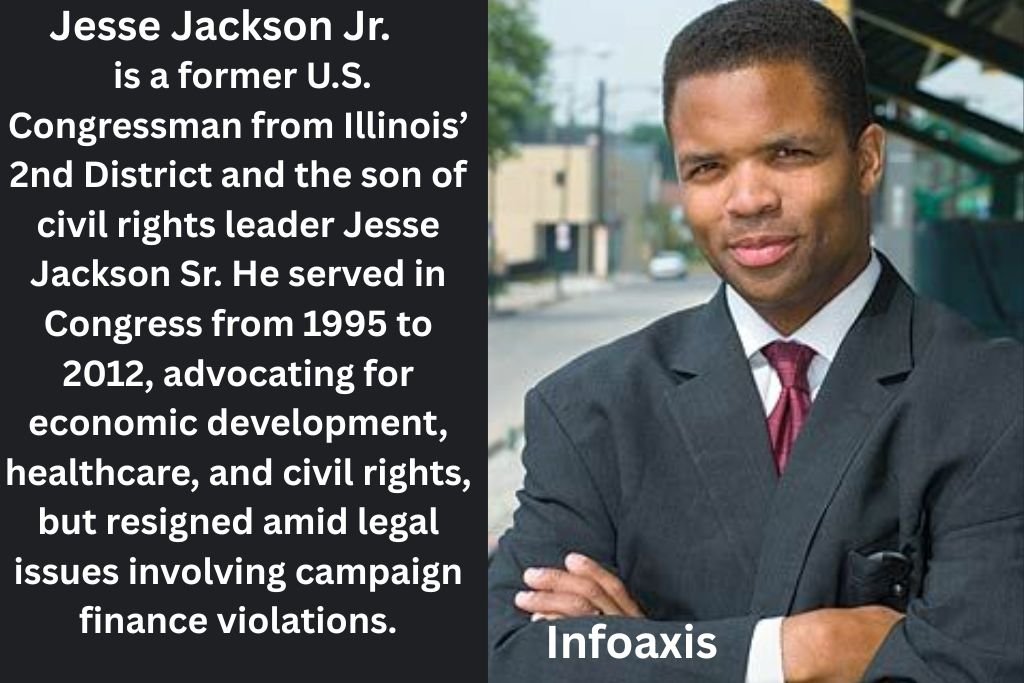
Jesse Louis Jackson Jr., born on March 11, 1965, in Greenville, South Carolina, is a figure whose name resonates with both American politics and the civil rights movement. As the son of renowned civil rights leader Jesse Jackson Sr., Jackson Jr. grew up in an environment infused with activism, public service, and social justice advocacy. Over the years, he carved a path of his own in American politics, serving as a U.S. Congressman for Illinois’ 2nd Congressional District from 1995 to 2012. While his career was marked by political accomplishments, it was also shadowed by controversy, legal troubles, and eventual resignation.
Early Life and Education
Jesse Jackson Jr. was born into a family deeply engaged in the civil rights struggle. His father, Jesse Jackson Sr., played a crucial role in advocating for racial equality, political empowerment, and social justice in the United States. Growing up in this environment profoundly influenced Jackson Jr.’s worldview, instilling in him a passion for public service from an early age.
Jackson Jr.’s educational journey began with a Bachelor of Science degree from North Carolina A&T State University, an institution known for nurturing African American leadership. He further pursued a Master of Divinity from the Chicago Theological Seminary, reflecting his interest in moral and social guidance, and later earned a Juris Doctor (law degree) from the University of Illinois College of Law. This educational foundation equipped him with the tools necessary for a career in law, politics, and advocacy, blending practical governance skills with ethical considerations.
Political Career: Rising in the Ranks
Jesse Jackson Jr.’s political career formally began with his election to the United States House of Representatives in 1995, following a special election to fill Illinois’ 2nd Congressional District seat. Representing a district that includes parts of Chicago and its suburbs, Jackson Jr. became one of the youngest African American members of Congress at the time.
During his tenure, Jackson Jr. was a member of several influential committees, including the House Appropriations Committee, where he played a critical role in federal budget allocations and policy oversight. His legislative priorities often focused on economic development, healthcare access, education, and civil rights, reflecting both the interests of his constituents and the broader legacy of social justice championed by his father.
Jackson Jr. was also an advocate for urban renewal and community development programs. He sought to increase funding for public services and infrastructure in underserved communities, particularly in Chicago. His work extended to issues such as voting rights, minority representation, and national healthcare reforms, demonstrating his commitment to both local and national concerns.
Publications and Thought Leadership
Beyond his work in Congress, Jesse Jackson Jr. authored and co-authored several books, combining personal experiences with policy insights. Notable works include:
- It’s About the Money – a guide on financial management and economic empowerment for individuals and communities.
- Legal Lynching II – a critical examination of race, the justice system, and the use of the death penalty in America.
- A More Perfect Union: Advancing New American Rights – a discussion on social justice, civil rights, and political philosophy.
Through these publications, Jackson Jr. not only addressed pressing societal issues but also contributed to the intellectual discourse on race, equity, and governance in the United States.
Legal Troubles and Resignation
Despite a promising political career, Jackson Jr.’s journey was marred by legal and ethical challenges. In 2012, he resigned from Congress, citing personal and health reasons, after a federal investigation into his financial dealings gained public attention. It was later revealed that Jackson Jr. had misused approximately $750,000 in campaign funds, leading to charges of conspiracy, mail fraud, and wire fraud.
In 2013, he pleaded guilty to these charges and was sentenced to 30 months in federal prison. This marked a dramatic turn in his public life, highlighting the complexities of political power, personal accountability, and public scrutiny. Despite the fall from grace, Jackson Jr. remained a figure of interest in discussions about political ethics, campaign finance reform, and the pressures faced by public officials.
Personal Life and Legacy
Jesse Jackson Jr. is married to Sandi Jackson (née Stevens), with whom he has two children. His personal life, much like his political career, has been closely scrutinized by media and public observers. Beyond the controversies, he remains engaged in public discourse, offering commentary on civil rights, political strategy, and community empowerment.
The legacy of Jesse Jackson Jr. is inseparable from that of his father. While he navigated the challenges of political office and personal mistakes, his upbringing in the Jackson family instilled in him a lasting commitment to social justice and civic engagement. His story serves as a complex example of the interplay between personal ambition, public service, and ethical responsibility.
Jesse Jackson Jr. in Contemporary Context
In today’s political landscape, Jesse Jackson Jr. is often remembered both for his contributions and his missteps. Analysts and historians view his career as a case study in the opportunities and challenges faced by African American politicians in the late 20th and early 21st centuries. While his legal troubles overshadowed some of his accomplishments, his work in Congress and his advocacy for marginalized communities continue to be referenced in discussions about political ethics, civil rights, and social justice initiatives.
For scholars, political enthusiasts, and the general public, Jackson Jr.’s life underscores the importance of accountability, the pressures of public office, and the enduring influence of familial legacy in shaping political trajectories.
Conclusion
Jesse Jackson Jr.’s life is a tapestry of promise, influence, and caution. From his early exposure to civil rights activism to his long tenure in Congress, he demonstrated a commitment to his constituents and a desire to effect meaningful change. However, his career also illustrates how personal choices and ethical lapses can dramatically alter the course of public service. Despite these setbacks, Jackson Jr. remains a notable figure in American politics, and his story continues to provide lessons in leadership, responsibility, and the challenges inherent in public life.
For readers seeking a comprehensive understanding of American politics, civil rights advocacy, and the human dimension of political service, the story of Jesse Jackson Jr. offers a compelling narrative. His life, career, and legacy are documented not only in official records and publications but also in the collective memory of a nation grappling with justice, equity, and governance.
Read more insights and updates about American politics on Infoaxis.
Read More : Abraham Quiros Villalba
Read More : Zero Differential Shoes











Leave a Reply