
Introduction
In modern warfare, air superiority has always played a decisive role. However, not every military force possesses advanced fighter jets or complex air defense networks. This is where MANPAD (Man-Portable Air Defense System) becomes critically important. Compact, powerful, and highly effective, MANPADS allow a single soldier or small team to target and destroy low-flying aircraft, helicopters, and drones.
Over the decades, MANPADS have reshaped battlefield dynamics, influenced global conflicts, and raised serious security concerns due to their portability and potential misuse. This article explores what MANPADS are, how they work, their history, types, global usage, risks, and their strategic importance in today’s world.
You May Also Read About: Unbanned G+
What is a MANPAD?
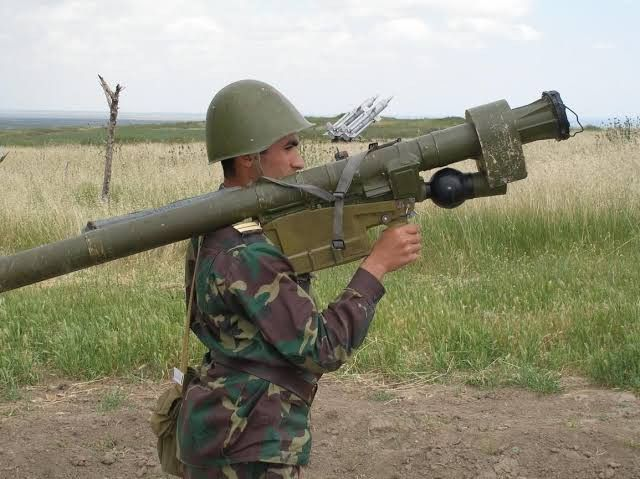
A MANPAD (Man-Portable Air Defense System) is a shoulder-fired surface-to-air missile (SAM) system designed to engage low-altitude aerial targets. These systems are lightweight enough to be carried and operated by one person, although some require a small crew.
MANPADS are primarily used to defend against:
- Low-flying fighter jets
- Attack helicopters
- Transport aircraft
- Unmanned Aerial Vehicles (UAVs) or drones
Because of their portability and effectiveness, they are considered one of the most influential infantry-level air defense weapons ever developed.
Key Features of MANPADS
1. Portability
One of the defining characteristics of a MANPAD is its lightweight design. Most systems weigh between 10 to 20 kilograms, making them easy to transport across rough terrain.
2. Short-Range Capability
MANPADS typically have an effective range of 3 to 8 kilometers, with engagement altitudes up to approximately 4 to 5 kilometers.
3. Fire-and-Forget Technology
Modern MANPADS often use “fire-and-forget” systems. Once launched, the missile independently tracks the target, allowing the operator to relocate immediately for safety.
4. Guidance Systems
MANPADS use different guidance technologies:
- Infrared (IR) Homing – Detects heat emitted from aircraft engines (most common).
- Laser Beam Riding – The missile follows a laser aimed at the target.
- Command Line-of-Sight (CLOS) – Operator manually guides the missile.
History and Development
MANPADS were first developed during the Cold War in the 1960s by both the United States and the Soviet Union. Early systems included:
- FIM-43 Redeye (USA)
- 9K32 Strela-2 (Soviet Union)
These early systems had limited accuracy but proved highly effective in combat. Technological advancements over time improved seeker sensitivity, countermeasure resistance, and targeting precision.
One of the most famous uses of MANPADS occurred during the Soviet-Afghan War (1979–1989) when U.S.-supplied Stinger missiles significantly impacted Soviet air operations.
Major Types of MANPADS
1. FIM-92 Stinger (USA)
The Stinger is one of the most widely known and exported MANPADS in the world. It features infrared homing and has been used in numerous global conflicts.
2. 9K38 Igla (Russia)
A successor to the Strela series, the Igla system improved accuracy and resistance to flares and countermeasures.
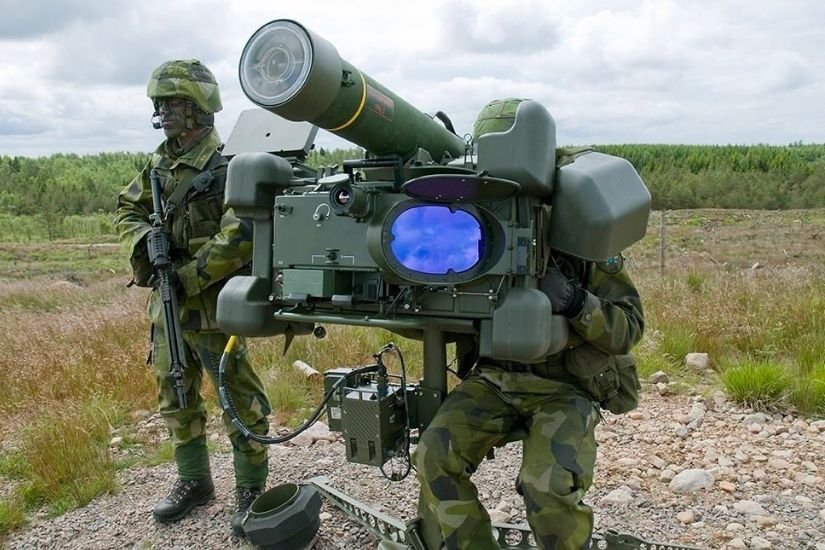
3. RBS-70 (Sweden)
Unlike many infrared systems, the RBS-70 uses laser guidance, making it resistant to traditional heat-based countermeasures.
4. Piorun (Poland)
A modern system with improved infrared guidance and enhanced performance against drones and helicopters.
Role of MANPADS in Modern Conflicts
MANPADS have become essential in asymmetric warfare. Non-state actors and smaller military forces use them to challenge superior air forces.
They have been deployed in conflicts such as:
- Afghanistan
- Iraq
- Syria
- Libya
- Ukraine
Their effectiveness against helicopters and low-flying aircraft forces air forces to adjust tactics, such as flying at higher altitudes or using advanced countermeasures.
Impact on Drone Warfare
With the rise of drones in modern warfare, MANPADS have gained renewed importance. Many advanced systems can target:
- Armed drones
- Reconnaissance UAVs
- Loitering munitions
As drones become more common on battlefields, portable air defense systems provide frontline troops with immediate protection.
Advantages of MANPADS
- Mobility – Easy to transport and deploy.
- Cost-Effective – Much cheaper than full air defense systems.
- Tactical Flexibility – Can be used in remote or urban environments.
- Psychological Impact – Forces aircraft to operate cautiously.
Security Risks and Global Concerns
Despite their military value, MANPADS pose serious global security risks.
Threat to Civil Aviation
Because they are portable and relatively easy to operate, MANPADS have been used in attacks on civilian aircraft. Aircraft are most vulnerable during takeoff and landing.
Proliferation
It is estimated that hundreds of thousands of MANPADS have been produced globally. More than 100 countries possess them. Some have fallen into the hands of non-state actors through black markets or conflict zones.
International Controls
To address these risks, international agreements and export controls aim to prevent illegal transfers. Many countries implement strict tracking and destruction programs for surplus systems.
Countermeasures Against MANPADS
Aircraft use several defensive systems to protect against MANPAD threats:
- Flares – Decoy heat sources that mislead infrared-guided missiles.
- DIRCM (Directed Infrared Countermeasures) – Laser systems that disrupt missile guidance.
- Tactical Maneuvers – Rapid altitude changes and evasive flying.
Modern aircraft, especially military transport and VIP aircraft, are often equipped with advanced anti-missile defense systems.
Strategic Importance in Modern Warfare
MANPADS have changed military strategy by:
- Reducing the dominance of low-altitude air power
- Increasing risks for helicopter operations
- Forcing the development of advanced countermeasures
- Empowering infantry units with anti-air capability
Even powerful air forces must consider MANPAD threats when planning operations in contested areas.
The Future of MANPADS
As technology advances, future MANPADS may include:
- Improved seeker sensitivity
- AI-assisted target recognition
- Better resistance to electronic countermeasures
- Enhanced drone detection capability
At the same time, global efforts to control their spread are expected to intensify due to ongoing security concerns.
Conclusion
MANPAD systems represent one of the most impactful innovations in modern military technology. Their portability, affordability, and effectiveness make them a powerful tool for both state and non-state actors. While they provide critical defense capabilities to armed forces worldwide, their proliferation presents ongoing security challenges.
As warfare continues to evolve—with increasing use of drones and precision air power—MANPADS will remain a vital yet controversial component of global military arsenals.
Understanding MANPADS is essential not only for defense analysts and policymakers but also for anyone interested in modern military strategy and global security dynamics.












Leave a Reply