
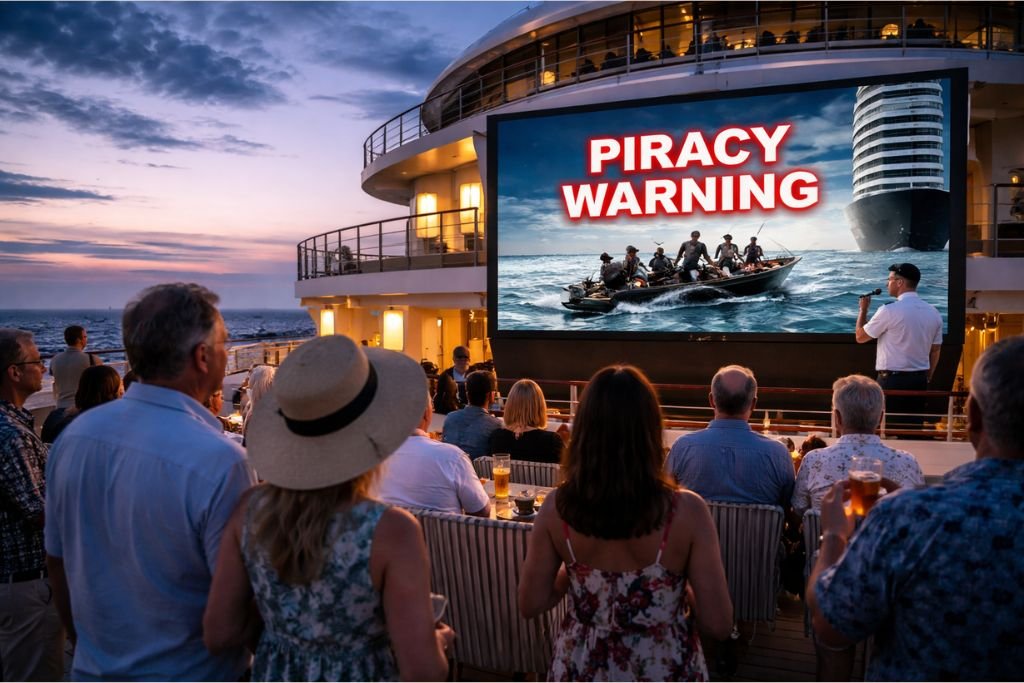
Luxury cruises are often associated with serene ocean views, gourmet dining, and world-class entertainment. For passengers, embarking on a cruise is a dream vacation—one that promises relaxation and adventure in equal measure. However, even in this world of luxury, the realities of global maritime travel occasionally intersect with the dangers of the sea. A recent incident involving a piracy warning for luxury cruise passengers has highlighted the safety measures cruise lines take when navigating high-risk waters.
You May Also Read About: CrackStreams
What Happened?
During a world cruise aboard a luxury liner, passengers were informed over the ship’s public announcement system that the vessel was entering waters “known for piracy threats.” The alert was precautionary, aimed at ensuring the safety and security of everyone on board. It quickly caught the attention of social media users as passengers shared the announcement and their reactions online.
The cruise in question was traversing a region historically associated with piracy, located between Southeast Asian nations. While no specific threat had been reported at the time, the ship’s captain and crew took proactive measures to minimize risk. Passengers were instructed to follow certain safety protocols during the transit, emphasizing the importance of vigilance in maritime travel.
Why Are Certain Waters Considered High-Risk?
Piracy is not a new phenomenon. Certain maritime regions, particularly those with heavy shipping traffic and limited naval patrols, have long been associated with pirate activity. These areas include parts of Southeast Asia, West Africa, and the waters surrounding the Horn of Africa.
Pirates typically target smaller cargo ships rather than large, modern cruise liners. However, precautionary measures are standard procedure for any vessel traveling through regions with a history of maritime crime. For luxury cruises, even though the likelihood of an actual attack is minimal, passenger safety remains a top priority.
Safety Measures Implemented During the Cruise
When passengers were warned about the piracy risk, the cruise line implemented a series of measures designed to reduce visibility and minimize potential threats. These measures included:
- Turning Off Cabin Lights: Passengers were advised to turn off non-essential lights in their cabins, reducing the visibility of the ship from the outside.
- Drawing Curtains: By keeping curtains closed, passengers helped maintain privacy while also minimizing external light exposure.
- Restricting Outdoor Access: Certain external decks were closed during nighttime hours to reduce exposure. Passengers were encouraged to remain inside during the hours of darkness.
- Crew Vigilance: The ship’s crew increased patrols and monitored all communication channels for potential threats, ensuring quick response capabilities if needed.
These precautions are consistent with standard maritime safety protocols for vessels traveling through areas with known piracy history. While these measures may seem cautious, they reflect the high standards of safety luxury cruise companies maintain for their passengers.
How Cruise Lines Prepare for Piracy Risks
Modern cruise ships are well-equipped to handle security challenges. Cruise lines routinely plan itineraries with safety in mind, often consulting maritime security experts and regional authorities. Preparation includes:
- Route Planning: Avoiding high-risk areas whenever possible or scheduling transit through sensitive regions during daylight hours.
- Emergency Drills: Crew members regularly practice anti-piracy drills to respond efficiently in case of an incident.
- Communication Protocols: Ships maintain constant communication with maritime authorities and other vessels, allowing rapid coordination if a threat emerges.
- Passenger Briefings: In regions with historical piracy activity, passengers may receive precautionary instructions, as seen in the recent warning incident.
Despite the presence of piracy in some regions, the risk to large passenger vessels is exceedingly low due to their size, speed, and security systems. Most pirate attacks are aimed at smaller, more vulnerable cargo ships rather than luxury liners carrying hundreds or thousands of passengers.
Passenger Reactions to the Warning
Social media reactions to the piracy warning were a mix of surprise, curiosity, and humor. Many passengers shared the announcement with friends and family, noting that while the alert was serious, it did not disrupt the overall cruise experience.
For most, the warning served as a reminder of the realities of global travel, even in a luxurious setting. Passengers continued their journey, enjoying amenities and activities, while following the simple safety instructions provided by the crew.
The Role of Technology in Ensuring Safety
Technology plays a critical role in enhancing maritime security. Modern cruise ships are equipped with radar, satellite communication, and advanced surveillance systems to monitor nearby vessels and potential threats. These systems allow the crew to detect suspicious activity long before it poses a risk.
Additionally, ships may use hull lighting, motion sensors, and automated alert systems to further reduce visibility and increase response time. These measures, combined with rigorous crew training, ensure that passengers remain safe even when transiting through historically risky waters.
Lessons Learned
The recent piracy warning for luxury cruise passengers underscores several important lessons for travelers and the cruise industry:
- Awareness Is Key: Even in luxury settings, being aware of potential risks is important. Passengers should follow safety instructions during high-risk transits.
- Precaution Over Panic: The warning was precautionary, highlighting that maritime safety involves proactive measures rather than reactive ones.
- Confidence in Crew and Systems: Modern cruise ships are designed to protect passengers from a wide range of threats, including piracy. The presence of trained crew and technological safeguards provides reassurance.
- Education and Communication: Clear communication between the ship’s crew and passengers ensures that everyone knows how to act during potential security incidents.
Conclusion
Luxury cruises remain one of the safest and most enjoyable ways to explore the world’s oceans. While piracy warnings may grab attention and spark concern, the reality is that modern cruise lines are extremely well-prepared to handle such situations. From advanced technology and route planning to crew training and passenger instructions, every precaution is taken to ensure safety without compromising the luxury experience.
The recent piracy warning serves as a reminder of the vigilance required in global maritime travel but also demonstrates the effectiveness of established safety protocols. Passengers can continue to enjoy the pleasures of cruising, confident that their well-being is always a top priority.








Leave a Reply