

Introduction: Why Modern Systems Demand a New Architecture
Modern software systems rarely fail because of syntax errors or small bugs. They fail because of complexity—uncontrolled dependencies, unclear boundaries, and systems that become too fragile to evolve. As applications grow, teams struggle with slow deployments, unexpected failures, and systems that are difficult to scale or even understand.
At INFOAXIS, we observe that many organizations reach a tipping point where traditional architectures stop working effectively. This is where SOA OS23 becomes relevant. It represents a shift toward designing systems that are modular, observable, and resilient by design. Rather than being a rigid standard, SOA OS23 is a practical architectural mindset that helps organizations regain control over increasingly complex distributed systems.
What is SOA OS23?
SOA OS23 can be understood as a modern evolution of Service-Oriented Architecture that aligns with today’s cloud-native and distributed computing environments. It is not a specific tool or framework, but a structured approach to designing systems as a collection of independent, loosely coupled services that communicate through well-defined APIs and events.
Unlike traditional SOA, which relied heavily on centralized middleware and rigid communication protocols, SOA OS23 emphasizes flexibility, decentralization, and real-time communication. It integrates modern technologies such as containers, orchestration platforms, and API gateways while maintaining the core SOA principle of reusable services. At INFOAXIS, we treat SOA OS23 as a strategic approach for building systems that are both scalable and maintainable in dynamic environments.
Evolution: From Traditional SOA to SOA OS23
To fully appreciate SOA OS23, it is important to understand the limitations of traditional SOA. Earlier architectures relied on centralized systems like Enterprise Service Buses, which created bottlenecks and reduced system agility. While these systems enabled integration, they also introduced complexity and slowed down development cycles.
As technology evolved, the industry shifted toward microservices, which prioritized independence and speed. However, this shift also introduced new challenges, including operational complexity and difficulties in maintaining system-wide consistency. SOA OS23 emerges as a balanced approach that combines the governance and structure of traditional SOA with the flexibility and scalability of microservices.
At INFOAXIS, we see this evolution as a necessary step toward creating systems that can adapt to modern demands without sacrificing stability or control.
Core Architectural Principles
The effectiveness of SOA OS23 depends on a set of foundational principles that guide how systems are designed and operated. These principles are not optional; they are essential for managing complexity in distributed environments.
One of the most critical principles is modular service design. Systems are divided into smaller services, each responsible for a specific business capability. This separation ensures that changes in one service do not disrupt the entire system. Another key principle is API-first design, where interfaces are defined before implementation, enabling teams to work independently and reducing integration risks.
Event-driven communication is also central to SOA OS23. Instead of relying solely on synchronous calls, services communicate through events, allowing systems to react in real time and scale more efficiently. At INFOAXIS, we emphasize that these principles must work together. A system that adopts only one or two of them will not achieve the full benefits of SOA OS23.
Service Boundaries and Domain Design
Defining service boundaries is one of the most challenging aspects of SOA OS23. Poorly defined boundaries lead to tightly coupled systems that are difficult to maintain and scale. Effective service design requires a deep understanding of the business domain and careful separation of responsibilities.
Using concepts from Domain-Driven Design, each service should represent a distinct bounded context with its own data and logic. This ensures that services remain independent and reduces the risk of unintended interactions. At INFOAXIS, we often highlight that sharing databases between services is a common anti-pattern that undermines the entire architecture.
Clear boundaries enable teams to work autonomously, improve system reliability, and make it easier to introduce changes without widespread impact.
Communication Patterns: APIs and Events
In SOA OS23, communication between services is handled through a combination of APIs and event-driven mechanisms. APIs provide a straightforward way for services to interact synchronously, making them suitable for user-facing operations where immediate responses are required.
However, relying solely on synchronous communication can create tight coupling and limit scalability. Event-driven communication addresses this by allowing services to publish and subscribe to events, enabling asynchronous interactions. This approach reduces dependencies and allows systems to handle high volumes of data more efficiently.
At INFOAXIS, we recommend using a hybrid approach where synchronous APIs handle direct interactions, while events manage background processes and workflows. This balance ensures both responsiveness and scalability.
Data Management and Consistency
Managing data in a distributed system is inherently complex. Unlike monolithic systems, where a single database ensures consistency, SOA OS23 requires each service to manage its own data. This introduces challenges related to consistency and synchronization.
Most SOA OS23 systems adopt eventual consistency, where data updates propagate over time rather than instantly. While this improves scalability, it requires careful design to avoid inconsistencies. Patterns such as Saga and event sourcing are commonly used to manage distributed transactions and maintain system integrity.
At INFOAXIS, we stress that data ownership must be clearly defined. Each service should have full control over its data, and interactions between services should occur through well-defined interfaces rather than shared databases.
Failure Handling in Distributed Systems
Failures are inevitable in distributed systems, and SOA OS23 must be designed to handle them gracefully. Unlike monolithic systems, where failures are often localized, distributed systems can experience cascading failures that affect multiple services.
To mitigate this, techniques such as circuit breakers, retries with backoff, and bulkhead isolation are essential. These mechanisms prevent failures from spreading and help maintain system stability. Additionally, designing services to be idempotent ensures that repeated operations do not cause unintended side effects.
At INFOAXIS, we emphasize that resilience is not an afterthought. It must be built into the system from the beginning, with careful consideration of how services interact and recover from failures.
Observability and Monitoring
Observability is a critical component of SOA OS23, as it provides visibility into system behavior and performance. Without proper monitoring, it becomes nearly impossible to diagnose issues or understand how services interact.
Modern observability tools such as OpenTelemetry, Prometheus, and Grafana enable teams to collect metrics, traces, and logs from across the system. This data allows engineers to identify bottlenecks, detect anomalies, and optimize performance.
At INFOAXIS, we consider observability a non-negotiable requirement. A system that cannot be observed cannot be effectively managed, regardless of how well it is designed.
Security in a Zero-Trust Environment
Security in SOA OS23 moves away from traditional perimeter-based models and adopts a zero-trust approach. In this model, every request is verified, and no service is inherently trusted.
This involves implementing strong authentication and authorization mechanisms, such as OAuth2 and OpenID Connect, along with encrypted communication between services. Each service operates with the least privilege necessary, reducing the risk of unauthorized access.
At INFOAXIS, we view security as an integral part of architecture rather than a separate concern. Incorporating security at every layer ensures that systems remain protected even as they scale and evolve.
When to Use and When to Avoid SOA OS23
While SOA OS23 offers significant advantages, it is not suitable for every situation. Small systems with limited complexity may benefit more from a well-structured monolith, which is easier to develop and maintain.
SOA OS23 becomes valuable when systems reach a level of complexity that requires modularity, scalability, and independent deployments. However, adopting this architecture without the necessary expertise and infrastructure can lead to increased complexity and operational challenges.
At INFOAXIS, we advise organizations to evaluate their needs carefully and adopt SOA OS23 incrementally, starting with areas that require the most flexibility and scalability.
Future Outlook of SOA OS23
The future of SOA OS23 is closely tied to advancements in cloud computing, artificial intelligence, and edge computing. As systems become more distributed, the need for architectures that can handle complexity and scale efficiently will continue to grow.
Emerging trends such as AI-driven orchestration and autonomous systems are likely to enhance the capabilities of SOA OS23, making systems more adaptive and resilient. At INFOAXIS, we believe that this architecture will continue to evolve, shaping the way modern applications are designed and operated.
Conclusion
SOA OS23 represents a mature approach to building distributed systems that balances flexibility with control. It is not a one-size-fits-all solution, but a powerful framework for organizations that need to manage complexity while maintaining agility.
By focusing on modular design, clear boundaries, and strong observability, SOA OS23 enables systems to scale effectively and adapt to changing requirements. At INFOAXIS, we see it as a practical path forward for organizations looking to build robust and future-ready software systems.
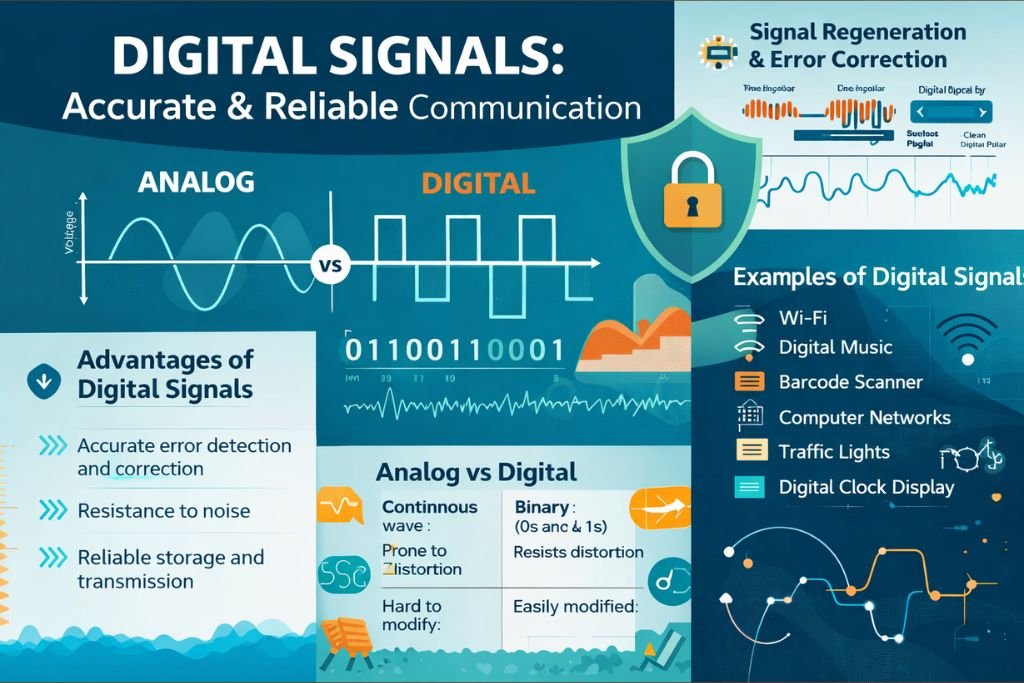
Read More : Why Digital Signals Are an Accurate and Reliable Way to Record and Send Information
Read More : Techview TheGameArchives











Leave a Reply