
Introduction
The phrase “speculum specula” invites both linguistic curiosity and conceptual depth. Derived from the Latin speculum (mirror) and its plural specula (mirrors), the expression—while not strictly classical in grammatical construction—can be interpreted as “mirror of mirrors” or “reflection of reflections.” This layered meaning provides a powerful framework for understanding how the concept of the speculum has evolved across disciplines, from ancient philosophy and medieval literature to modern medicine and contemporary critical thought.
Far more than a simple object, the speculum represents a convergence of ideas: visibility, knowledge, control, and introspection. Its journey from reflective surface to medical instrument—and from metaphor to mechanism—reveals how humanity has continuously sought to make the unseen visible.
Etymology and Conceptual Foundations
The Latin word speculum originates from the verb specere, meaning “to look” or “to observe.” In its earliest usage, a speculum was a mirror—a tool for reflecting images. However, even in antiquity, mirrors carried symbolic weight. They were associated not only with physical reflection but also with truth, perception, and self-awareness.
The plural form, specula, expands this idea into multiplicity. When considered together, speculum specula suggests more than simple reflection—it implies recursion, layering, and the possibility of infinite interpretive depth. This conceptual richness allowed the term to transcend its literal meaning and enter intellectual, literary, and scientific domains.
The Speculum in Classical and Medieval Thought
Classical Roots
In ancient Greek and Roman contexts, mirrors were both practical and symbolic objects. Polished metal mirrors were used for personal grooming, but they also appeared in philosophical discussions about perception and reality. Reflection was often linked to knowledge—what one sees is not always what is true, but it is a starting point for inquiry.
Medieval “Speculum Literature”
The metaphorical potential of speculum reached its height during the medieval period, where it became the foundation of an entire literary genre known as speculum literature. These texts were designed to serve as “mirrors” of the world, offering comprehensive representations of knowledge, morality, and divine order.
Prominent examples include:
- Speculum Maius (The Great Mirror) by Vincent of Beauvais
- Speculum Humanae Salvationis (Mirror of Human Salvation)
- Speculum Naturale (Mirror of Nature)
These works attempted to reflect the totality of human understanding—history, science, theology, and ethics—within a single structured framework. In this context, the speculum became a tool not of physical reflection, but of intellectual organization.
Thus, specula were no longer objects but systems—frameworks through which reality could be observed, interpreted, and taught.
The Medical Speculum: From Metaphor to Instrument
Early Origins
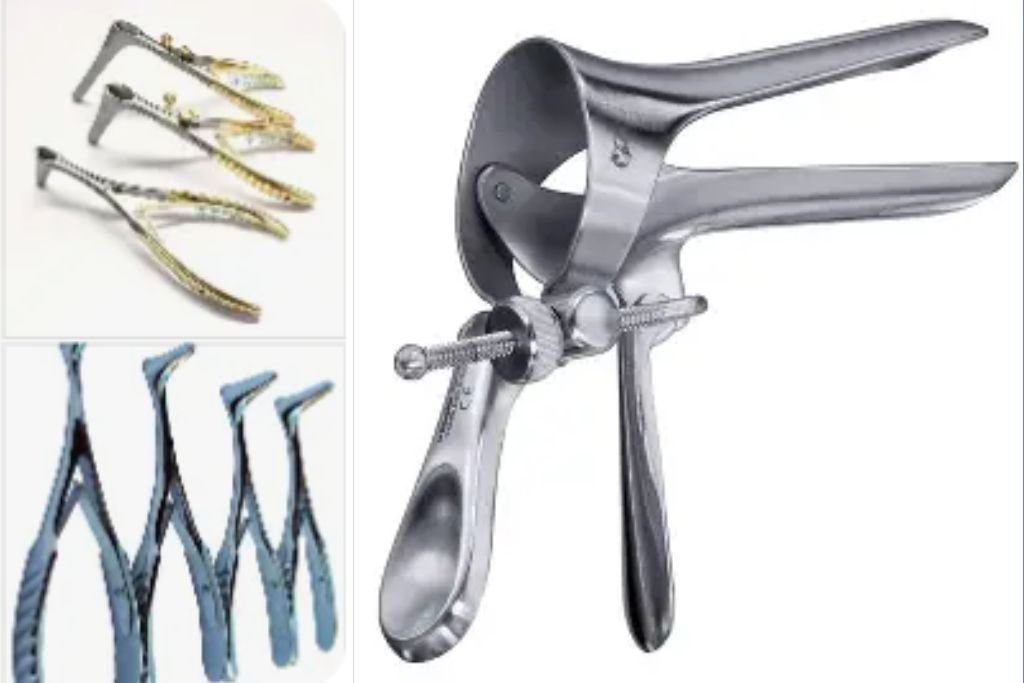
The medical use of the speculum dates back to ancient civilizations. Archaeological evidence from Pompeii and other Roman sites reveals early versions of vaginal and rectal specula, typically made of bronze or other metals. These instruments were designed to facilitate direct visual examination of internal body cavities.
Development in the 19th Century
The modern medical speculum underwent significant refinement in the 19th century, particularly in the field of gynecology. Innovations in design improved functionality, allowing for more precise and consistent examinations.
Key developments included:
- The introduction of bivalve specula, which could be expanded for better visibility
- Improved materials and ergonomics
- Integration into standardized clinical practice
However, this period is also marked by ethical controversies. Some advancements were achieved through experimentation that did not meet modern standards of consent, particularly involving marginalized populations. These historical realities continue to shape contemporary discussions about medical ethics.
Modern Usage
Today, specula are widely used in various medical fields, including:
- Gynecology (vaginal examinations)
- Proctology (rectal examinations)
- Otolaryngology (ear and nasal examinations)
- Ophthalmology (eyelid retraction tools)
Modern designs prioritize hygiene, comfort, and usability, with many specula now made from disposable plastic and equipped with integrated lighting.
The Speculum as a Tool of Visibility
At its core, the speculum transforms invisibility into visibility. It allows practitioners to observe internal structures that would otherwise remain hidden. This function aligns closely with the original meaning of speculum as a mirror—but with a crucial difference.
A traditional mirror reflects what is already visible.
A medical speculum reveals what is not.
This shift from reflection to exposure represents a fundamental evolution in the concept. The speculum does not merely mirror reality; it actively constructs access to it.
Power, Ethics, and the Politics of Observation
The act of looking is never neutral. The speculum, particularly in its medical context, embodies a complex relationship between observer and observed.
Authority and Control
Medical examination inherently involves a power dynamic:
- The practitioner controls the instrument and the process
- The patient becomes the subject of observation
The speculum, as an instrument of access, mediates this relationship. It enables diagnosis and treatment, but it also introduces questions about autonomy, consent, and comfort.
Historical Critique
The history of gynecology includes instances where the use of the speculum was tied to unethical practices. These histories have prompted ongoing critique and reform, leading to:
- Greater emphasis on informed consent
- Development of patient-centered care models
- Redesign of instruments to reduce discomfort
Contemporary Perspectives
Today, the speculum is often discussed not only as a medical tool but also as a symbol:
- Of scientific progress
- Of institutional authority
- Of the tension between care and intrusion
Speculum Specula in the Modern World
The idea of speculum specula extends beyond medicine and literature into contemporary life. In a world increasingly mediated by technology, we are surrounded by new forms of “mirrors”:
- Digital screens reflecting curated identities
- Data systems analyzing behavior
- Surveillance technologies observing and recording
These systems function as modern specula—tools that reflect aspects of human existence back to us. However, like their historical counterparts, they are not neutral. They shape perception, influence behavior, and raise questions about control and privacy.
Thus, speculum specula can be understood as a framework for analyzing layered systems of observation:
- The body observed through instruments
- Knowledge organized through texts
- Identity reflected through technology
Each layer adds complexity, creating a network of reflections that define how reality is understood.
Interdisciplinary Significance
The enduring relevance of the speculum lies in its ability to bridge disciplines:
| Domain | Role of the Speculum |
|---|---|
| Medicine | Instrument for internal examination |
| Literature | Metaphor for knowledge and truth |
| Philosophy | Symbol of reflection and perception |
| History | Artifact of scientific and ethical evolution |
| Technology | Model for systems of observation |
This interdisciplinary nature reinforces the idea that the speculum is not confined to a single meaning. Instead, it operates as a conceptual tool that adapts to different contexts while retaining its core association with visibility and reflection.
Conclusion
Speculum specula—a mirror of mirrors—captures the layered complexity of human inquiry. From ancient reflective surfaces to modern medical instruments and digital systems, the speculum has continually evolved as a means of making the unseen visible.
Yet, with visibility comes responsibility. Every act of observation carries implications: ethical, philosophical, and social. The speculum reveals, but it also shapes what is revealed. It illuminates, but it can also intrude.
Ultimately, the concept of speculum specula reminds us that knowledge is not a single reflection, but a series of reflections—each influenced by the tools we use and the perspectives we bring. In seeking to understand the world, the body, and ourselves, we construct mirrors. And in those mirrors, we find not only answers, but deeper questions about how and why we look at all.












Leave a Reply