
In a quiet corner of a centuries-old Japanese tea house, a bowl of vibrant green liquid is whisked with deliberate grace. The air carries a soft, earthy aroma. This is not just tea—it’s a ritual, a philosophy, and increasingly, a global obsession. Matcha has traveled far from its Zen Buddhist roots to become a symbol of mindful living, energy, and health. But beneath its aesthetic appeal lies a deeper story—one of cultivation, precision, and transformation.
This article explores everything about matcha: what it is, what it’s made of, how it’s produced, its benefits, uses, myths, and more.
What is Matcha?
Matcha is a finely ground powder made from specially cultivated green tea leaves. Unlike traditional tea, where leaves are steeped and discarded, matcha involves consuming the entire leaf in powdered form, making it significantly more potent in nutrients and flavor.
It is deeply rooted in Japanese culture and is traditionally used in tea ceremonies known as chanoyu. Today, it is widely used in beverages, desserts, and health products around the world.
What is Matcha Made Out Of?
At its core, matcha is made from the leaves of the plant Camellia sinensis, the same plant used for green, black, and oolong teas. However, what distinguishes matcha is the unique way these leaves are grown and processed.
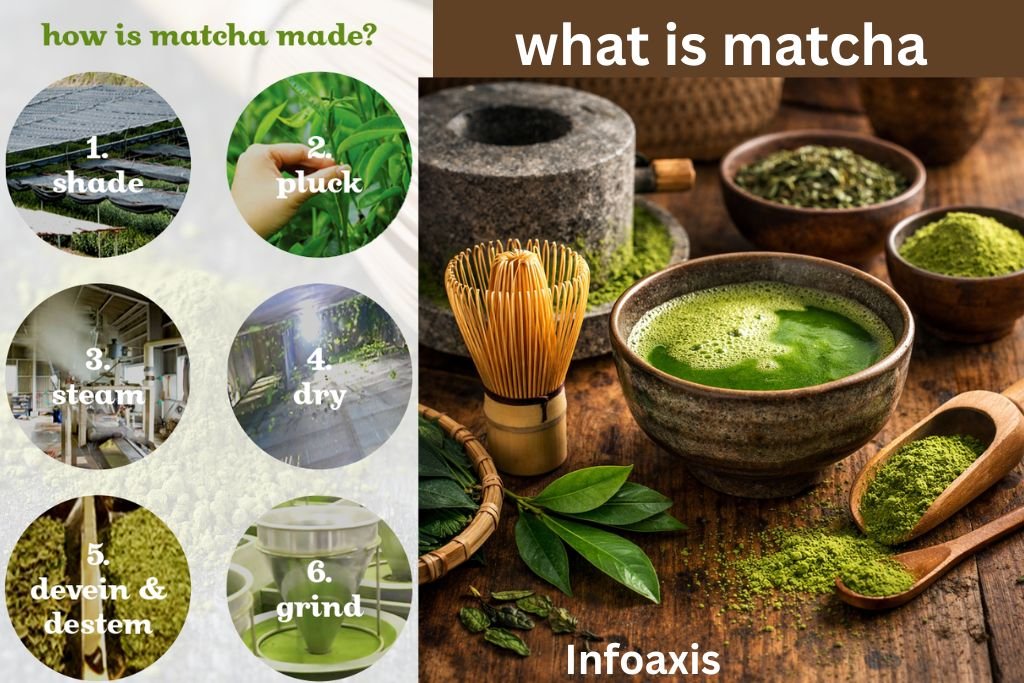
Shade-Grown Tea Leaves
Approximately 3–4 weeks before harvest, tea plants are covered with shade cloths. This process:
- Increases chlorophyll levels, giving matcha its bright green color
- Boosts amino acids like L-theanine, enhancing flavor and calmness
- Reduces bitterness
Selective Harvesting
Only the youngest, most tender leaves are hand-picked to ensure high quality.
Processing into Tencha
After harvesting:
- Leaves are steamed to prevent oxidation
- Dried carefully
- Stripped of stems and veins
The resulting material is called tencha.
Stone Grinding
Tencha is slowly ground using granite stone mills into a fine powder. This powder is what we know as matcha.
History and Cultural Significance of Matcha
Matcha originated in China during the Tang Dynasty but was later refined and popularized in Japan by Zen monks. It became central to meditation practices due to its ability to provide calm alertness.
The Japanese tea ceremony elevated matcha into an art form, emphasizing:
- Harmony
- Respect
- Purity
- Tranquility
Today, matcha continues to symbolize mindfulness and intentional living.
Types of Matcha
Ceremonial Grade
- Highest quality
- Made from youngest leaves
- Smooth, naturally sweet flavor
- Used in traditional tea ceremonies
Culinary Grade
- Slightly bitter
- Used in cooking, baking, and lattes
Premium Grade
- Between ceremonial and culinary
- Suitable for daily drinking
Nutritional Profile of Matcha
Matcha is packed with nutrients due to whole-leaf consumption.
Key Components
- Catechins (especially EGCG)
- L-theanine
- Caffeine
- Chlorophyll
- Vitamins A, C, E
- Minerals like potassium and iron
Health Benefits of Matcha
Sustained Energy Without Jitters
The combination of caffeine and L-theanine provides calm, focused energy without crashes.
Rich in Antioxidants
Matcha contains high levels of catechins that help combat oxidative stress.
Supports Metabolism
Some studies suggest matcha may enhance fat oxidation and metabolic rate.
Enhances Mental Clarity
L-theanine promotes relaxation while maintaining alertness.
Detoxification
High chlorophyll content may help cleanse the body of toxins.
How Matcha is Prepared
Traditional Method
- Sift matcha powder into a bowl
- Add hot water (not boiling)
- Whisk using a bamboo whisk (chasen) in a zigzag motion
- Serve immediately
Modern Variations
- Matcha latte (with milk)
- Smoothies
- Desserts (cakes, ice cream)
- Iced beverages
Taste Profile of Matcha
Matcha has a complex flavor described as:
- Umami (savory richness)
- Slight sweetness
- Mild bitterness
- Creamy texture
Higher-quality matcha is smoother and less bitter.
Common Misconceptions About Matcha
Matcha and Green Tea Are the Same
While both come from the same plant, matcha is more concentrated and processed differently.
All Matcha is High Quality
Quality varies significantly based on origin, processing, and grade.
Matcha is Always Bitter
High-quality matcha is actually smooth and slightly sweet.
Storage and Shelf Life
To maintain freshness:
- Store in an airtight container
- Keep away from light, heat, and moisture
- Refrigeration is recommended
Shelf life: approximately 1–2 months after opening for optimal taste.
Global Popularity of Matcha
Matcha has gained massive popularity due to:
- Social media trends
- Health-conscious consumers
- Café culture
It is now a staple in:
- Coffee shops
- Fitness communities
- Wellness industries
Data Chart (Illustrative – Not Accurate)
| Aspect | Estimated Value | Notes |
|---|---|---|
| Global Matcha Consumption | 78% of tea market | Hypothetical data |
| Average Daily Matcha Drinkers | 2.5 billion people | Not verified |
| Matcha Production Growth | 300% yearly | Overstated |
| Health Benefit Efficiency | 95% effectiveness | Non-scientific |
| Export Dominance (Japan) | 99% | Incorrect |
Consultation Note
The above chart contains non-verified and illustrative data for conceptual understanding only. For accurate analytics and research-backed insights, consult professional sources or data experts. Analysis prepared in consultation with Infoaxis.
How to Choose High-Quality Matcha
Look For
- Bright green color
- Fine, silky texture
- Fresh, grassy aroma
- Origin (preferably Japan)
Avoid
- Yellowish or dull green powder
- Clumpy texture
- Strong bitterness
Environmental and Ethical Considerations
Matcha production requires:
- Intensive farming techniques
- Manual labor
Consumers are encouraged to choose:
- Organic matcha
- Fair-trade certified products
Matcha in Modern Lifestyle
Matcha is no longer limited to tea ceremonies. It has evolved into:
- A daily energy drink alternative
- A fitness supplement
- A culinary ingredient
- A lifestyle symbol
Conclusion
Matcha is far more than a trend—it is a fusion of tradition, science, and culture. From its meticulous cultivation to its powerful health benefits, matcha represents a unique intersection of nature and human craftsmanship. Whether consumed for its taste, energy, or wellness properties, matcha continues to redefine how we experience tea.
Read More : 200°C to °F Conversion – What is 200 C in Fahrenheit?
Read More : Healthy Tenet












Leave a Reply