
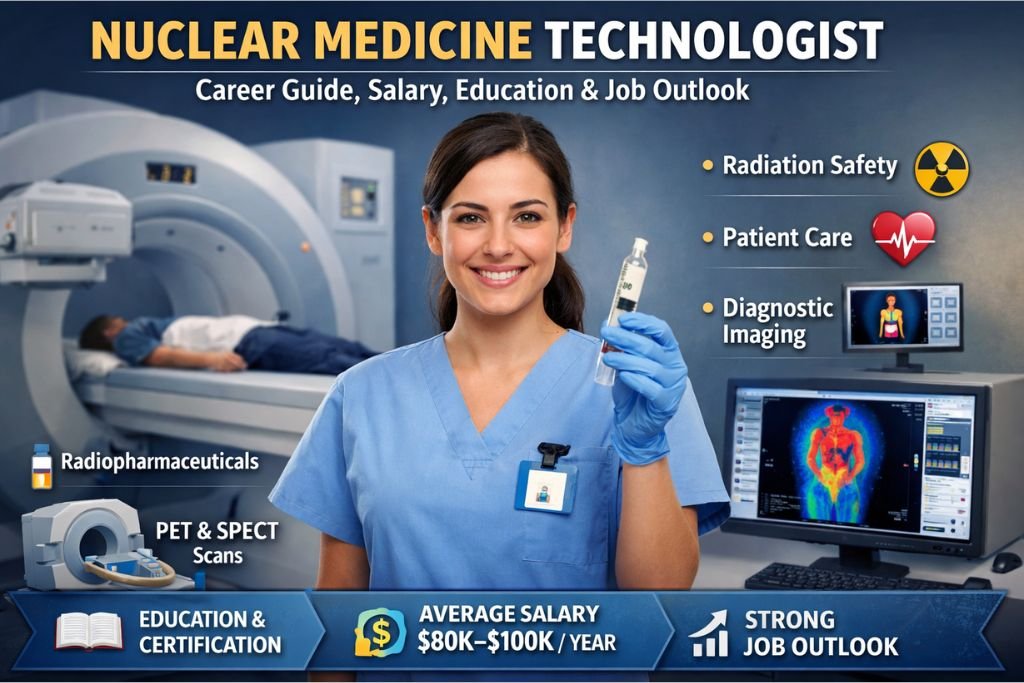
Healthcare technology has evolved rapidly over the past few decades, and one of the most fascinating and specialized fields within medical imaging is nuclear medicine. At the heart of this field is the nuclear medicine technologist — a highly trained healthcare professional who uses radioactive materials to diagnose and sometimes treat diseases.
This career combines science, patient care, advanced imaging technology, and strict safety protocols, making it one of the most technical and rewarding roles in modern healthcare.
In this detailed guide, we will explore everything about a nuclear medicine technologist — including job responsibilities, education, skills, salary, career outlook, work environment, and advancement opportunities.
You May Also Read About: Best Places to Camp in California
What Is a Nuclear Medicine Technologist?
A nuclear medicine technologist is a healthcare professional who prepares and administers small amounts of radioactive substances known as radiopharmaceuticals to patients. These substances allow doctors to examine how organs and tissues are functioning inside the body.
Unlike traditional X-rays that show body structure, nuclear medicine focuses on body function. It helps detect:
- Cancer
- Heart disease
- Brain disorders
- Thyroid problems
- Bone infections
- Kidney disorders
- Lung conditions
After administering the radioactive tracer, the technologist uses specialized imaging equipment such as gamma cameras, PET scanners (Positron Emission Tomography), and SPECT scanners to capture detailed images. Physicians then analyze these images to diagnose or monitor disease.
Key Responsibilities of a Nuclear Medicine Technologist
The daily duties of a nuclear medicine technologist require both technical precision and patient interaction. Their responsibilities typically include:
1. Preparing Radiopharmaceuticals
They calculate the correct radioactive dosage based on:
- Patient’s age
- Weight
- Medical condition
- Type of imaging study
Accuracy is extremely important because incorrect dosage can affect image quality or patient safety.
2. Administering Radioactive Tracers
Radiopharmaceuticals may be given:
- Through injection
- Orally (pill or liquid)
- By inhalation
The technologist ensures the procedure is safe and comfortable for the patient.
3. Operating Imaging Equipment
They operate advanced imaging systems to capture internal images of organs and tissues. This requires technical expertise and understanding of imaging physics.
4. Monitoring Patients
Technologists monitor patients during procedures, watching for:
- Allergic reactions
- Discomfort
- Anxiety
- Vital sign changes
They also explain procedures clearly to reduce patient stress.
5. Radiation Safety
Radiation protection is a major part of the job. Technologists:
- Follow strict safety protocols
- Use protective equipment
- Monitor radiation exposure levels
- Ensure proper disposal of radioactive waste
6. Maintaining Equipment
They perform quality control tests and calibrate imaging machines regularly to ensure accurate results.
7. Record Keeping
Accurate documentation of procedures, dosages, and patient information is essential.
Educational Requirements
Becoming a nuclear medicine technologist requires formal education and clinical training.
Associate Degree (Most Common Path)
Most professionals complete a 2-year associate degree in nuclear medicine technology.
Bachelor’s Degree
Some choose a 4-year bachelor’s degree for better career advancement opportunities.
Coursework Includes:
- Anatomy and physiology
- Physics
- Radiation safety
- Chemistry
- Medical terminology
- Patient care
- Computer science
- Imaging procedures
Clinical Training
Students complete hands-on clinical experience in hospitals or imaging centers under supervision.
Certification and Licensing
In many countries and regions, certification is required to practice.
Common certification bodies include:
- Nuclear Medicine Technology Certification Board
- American Registry of Radiologic Technologists
Certification typically requires:
- Graduation from an accredited program
- Passing a comprehensive examination
- Continuing education credits for renewal
Some states or countries also require professional licensure.
Essential Skills for Success
A nuclear medicine technologist must possess both technical and interpersonal skills.
Technical Skills
- Strong understanding of radiation physics
- Knowledge of imaging equipment
- Mathematical accuracy for dosage calculations
- Attention to detail
Interpersonal Skills
- Compassion and empathy
- Clear communication
- Ability to calm anxious patients
- Teamwork with doctors and nurses
Physical Requirements
- Standing for long periods
- Lifting or positioning patients
- Handling sensitive equipment
Work Environment
Nuclear medicine technologists typically work in:
- Hospitals
- Diagnostic imaging centers
- Outpatient clinics
- Cancer treatment centers
- Research facilities
Most work full-time, but schedules may include:
- Evenings
- Weekends
- On-call shifts
The job environment is generally safe, but strict adherence to radiation safety guidelines is essential.
Salary Expectations
Salary varies depending on experience, education, and location.
In developed countries, the annual salary range is generally:
- Entry-level: $60,000 – $75,000
- Mid-level: $80,000 – $95,000
- Experienced professionals: $100,000+
Those with advanced certifications (such as PET/CT specialization) may earn higher salaries.
Job Outlook and Demand
The demand for nuclear medicine technologists is expected to remain steady due to:
- Aging populations
- Increasing use of diagnostic imaging
- Growth in cancer detection and treatment
- Advances in medical technology
While automation is increasing in healthcare, the technical expertise and patient interaction required in nuclear medicine make this profession stable and secure.
Difference Between Nuclear Medicine Technologist and Radiologic Technologist
Although both work in medical imaging, their roles differ:
| Nuclear Medicine Technologist | Radiologic Technologist |
|---|---|
| Uses radioactive tracers | Uses X-rays |
| Focuses on body function | Focuses on body structure |
| Performs PET and SPECT scans | Performs X-rays, CT scans |
| Works with radiopharmaceuticals | Does not handle radioactive drugs |
Both careers are valuable but require different training.
Career Advancement Opportunities
With experience and additional education, a nuclear medicine technologist can advance into:
- Senior technologist roles
- Department supervisor
- Clinical instructor
- Imaging specialist
- Research technologist
- Healthcare administrator
Some also specialize in:
- PET/CT imaging
- Nuclear cardiology
- Oncology imaging
Advantages of This Career
✔ High earning potential
✔ Strong job stability
✔ Opportunity to help diagnose serious diseases
✔ Advanced medical technology exposure
✔ Professional respect within healthcare
Challenges of the Profession
⚠ Working with radioactive materials
⚠ Emotional stress from seriously ill patients
⚠ Long hours and physical demands
⚠ High level of responsibility
Despite these challenges, many professionals find the career deeply fulfilling.
Who Should Consider This Career?
This career is ideal for individuals who:
- Enjoy science and healthcare
- Are comfortable with technology
- Have strong attention to detail
- Want a stable and well-paying career
- Care about helping patients
If you enjoy both patient interaction and technical work, nuclear medicine technology may be an excellent choice.
The Future of Nuclear Medicine
Advancements in imaging technology and radiopharmaceutical development are expanding the scope of nuclear medicine. Personalized medicine, targeted cancer therapy, and hybrid imaging systems are increasing the importance of skilled technologists.
As healthcare continues to evolve, nuclear medicine technologists will remain essential in early diagnosis and treatment planning.
Conclusion
A nuclear medicine technologist plays a critical role in modern healthcare by combining science, technology, and patient care. From preparing radioactive tracers to operating sophisticated imaging machines, this profession requires dedication, precision, and compassion.
With strong salary potential, job stability, and opportunities for growth, nuclear medicine technology is a rewarding and respected career path in the medical field. As diagnostic imaging continues to advance, the demand for skilled professionals in this area will only increase, making it a promising option for future healthcare workers.













Leave a Reply