
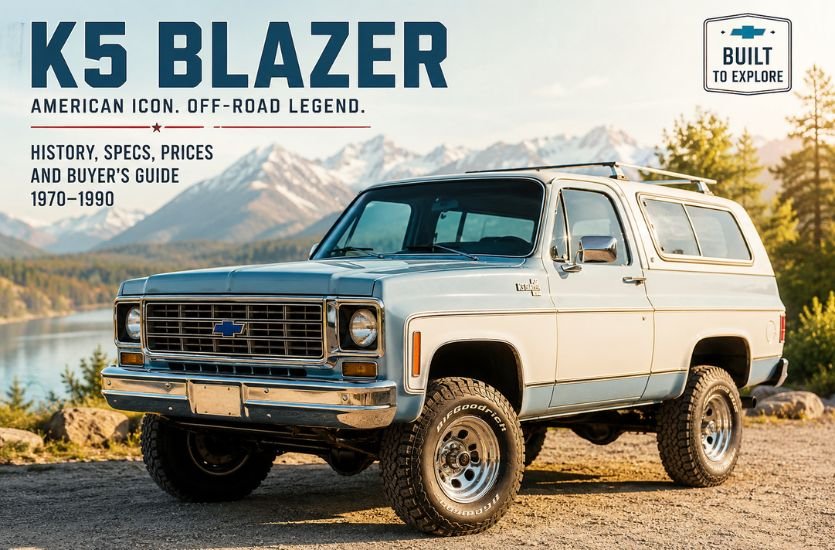
Long before modern SUVs filled suburban driveways and city streets, one rugged machine had already earned its reputation as a symbol of freedom, adventure, and raw capability. The Chevrolet K5 Blazer wasn’t designed merely to transport people from one destination to another—it was built to conquer mountains, muddy trails, snowy backroads, and open highways with equal confidence. Its combination of truck-like strength, powerful V8 engines, removable roof, and unmistakable square-body styling transformed it into one of the most beloved full-size SUVs in automotive history. Even decades after production ended, the K5 Blazer continues to attract collectors, restorers, and off-road enthusiasts who appreciate its timeless design and unmatched versatility.
Today, interest in the K5 Blazer is stronger than ever. Searches for terms like K5 Blazer for sale, Chevy K5 Blazer price, 1970 K5 Blazer, K5 Blazer 1980, and K5 Blazer 1990 continue to grow as enthusiasts seek both pristine collector vehicles and affordable restoration projects. Whether you’re researching its history, considering purchasing one, or simply fascinated by classic American SUVs, the K5 Blazer remains a benchmark against which many vintage four-wheel-drive vehicles are measured.
The Birth of the Chevrolet K5 Blazer
The Chevrolet K5 Blazer made its debut for the 1969 model year as General Motors’ response to the growing popularity of utility vehicles like the Ford Bronco, Jeep CJ, and International Scout. While those competitors were compact and practical, Chevrolet took an entirely different approach. Instead of building a small off-roader, the company created a full-size SUV based directly on its successful C/K pickup truck platform.
This decision immediately set the K5 Blazer apart. It offered significantly more interior space, greater towing capacity, a stronger chassis, and the comfort expected from a full-size truck. Families appreciated its spacious cabin, ranch owners valued its durability, and outdoor enthusiasts loved its ability to travel confidently over rough terrain.
From its very first year, the K5 Blazer earned praise for combining work-truck toughness with recreational versatility. It wasn’t simply a truck with a roof—it was an entirely new interpretation of what an SUV could become.
Why the K5 Blazer Became an Icon
Many classic vehicles gain popularity because of nostalgia, but the K5 Blazer earned its reputation through genuine capability. Built on a heavy-duty ladder frame, it possessed the strength needed for demanding off-road use while remaining comfortable enough for daily driving.
Its removable fiberglass top became one of its defining features. Drivers could enjoy an enclosed cabin during winter months and transform the vehicle into an open-air adventure machine during summer, offering an experience unlike most modern SUVs.
The combination of large-displacement engines, four-wheel-drive systems, generous ground clearance, and simple mechanical design made the K5 Blazer incredibly versatile. It could tow boats, haul camping gear, navigate muddy trails, and serve as dependable family transportation all within the same weekend.
Perhaps most importantly, the K5 Blazer developed a reputation for reliability. Many examples accumulated hundreds of thousands of miles with proper maintenance, helping establish Chevrolet’s credibility in the rapidly expanding SUV market.
Early Design Philosophy
When Chevrolet engineers developed the K5 Blazer, practicality remained a primary objective. Instead of designing an entirely new platform, they utilized the proven half-ton pickup chassis that had already demonstrated exceptional durability.
This strategy provided several advantages. Replacement parts were readily available, maintenance remained relatively simple, and owners could easily upgrade suspension, drivetrain, and engine components using existing truck parts. That interchangeability continues to benefit restorers and enthusiasts today.
The vehicle featured a short wheelbase compared to standard pickup trucks, improving maneuverability both on trails and in urban environments. Despite its shorter length, the cabin remained spacious enough for passengers and cargo, striking an ideal balance between utility and comfort.
Inside, the dashboard reflected Chevrolet’s pickup truck heritage with straightforward gauges, durable materials, and intuitive controls. While luxury wasn’t the primary focus during the early years, buyers appreciated the simplicity and ease of maintenance.
First Generation K5 Blazer (1969–1972)
The first generation of the K5 Blazer remains one of the most desirable among collectors. Produced from 1969 through 1972, these early models showcased clean body lines, rounded front fenders, and an unmistakable stance that still commands attention today.
One of the most distinctive characteristics of first-generation Blazers was the fully removable fiberglass roof. Unlike later models that retained a fixed cab section, these early vehicles allowed owners to remove nearly the entire roof, creating an open-air driving experience similar to a convertible truck.
This feature became enormously popular among outdoor enthusiasts who enjoyed camping, fishing, beach driving, and trail exploration. It also contributed significantly to the vehicle’s unique personality, making every drive feel like an adventure.
Although relatively simple by modern standards, the first-generation interior provided impressive practicality. Wide bench seating, abundant cargo space, and durable vinyl upholstery made the K5 Blazer well suited for both work and recreation.
Engine Options During the Early Years
Chevrolet understood that buyers expected substantial power from a full-size utility vehicle. As a result, the first-generation K5 Blazer offered several engine choices to accommodate different driving needs.
Entry-level buyers could choose reliable inline-six engines known for fuel efficiency and durability. However, most customers preferred the available V8 engines, which delivered significantly greater torque for towing, hauling, and off-road driving.
The legendary 350 cubic-inch small-block V8 quickly became the most popular option. Its smooth power delivery, mechanical simplicity, and outstanding reliability established it as one of Chevrolet’s greatest engines. Even today, countless restored K5 Blazers continue to utilize this iconic powerplant.
Transmission options included both manual and automatic gearboxes, giving buyers additional flexibility depending on their driving preferences.
Four-Wheel Drive Excellence
Unlike many SUVs that emphasized appearance over functionality, the K5 Blazer was engineered for genuine off-road performance. Its four-wheel-drive system provided exceptional traction across snow, sand, rocks, and muddy terrain.
Solid axles, rugged transfer cases, and generous suspension travel allowed the vehicle to tackle challenging trails with remarkable confidence. Combined with powerful V8 engines, the K5 Blazer became equally capable on highways and remote wilderness roads.
Its truck-based construction also meant owners could install larger tires, lift kits, locking differentials, and numerous aftermarket upgrades without extensive modification. This adaptability remains one of the reasons why the K5 Blazer continues to enjoy a passionate enthusiast community decades after production ended.
Spotlight on the 1970 K5 Blazer
Among all early models, the 1970 K5 Blazer occupies a particularly special place in automotive history. Produced during only the second year of K5 Blazer production, it represents the purest expression of Chevrolet’s original vision.
The 1970 model retained the fully removable roof, classic front grille, rounded body styling, and straightforward mechanical components that collectors admire today. It offered buyers a rugged vehicle capable of performing demanding work while still delivering comfort for weekend adventures.
Engine choices included both inline-six and V8 options, with the 350 cubic-inch V8 emerging as the preferred choice for drivers seeking stronger acceleration and improved towing performance. The robust drivetrain, paired with Chevrolet’s dependable four-wheel-drive system, made the 1970 K5 Blazer a favorite among ranchers, hunters, and outdoor enthusiasts across North America.
From today’s perspective, the 1970 K5 Blazer has become one of the most collectible classic SUVs ever produced. Well-preserved original examples are increasingly rare, while professionally restored models often command premium prices at collector auctions. Enthusiasts particularly value vehicles retaining their factory drivetrains, original paint colors, and period-correct interiors, as authenticity significantly influences long-term value.
Beyond its financial appreciation, the 1970 K5 Blazer represents an era when vehicles were designed with mechanical simplicity, durability, and driver involvement as primary priorities. Every detail—from the removable roof to the sturdy truck frame—reflects Chevrolet’s commitment to building an SUV capable of handling virtually any challenge its owner encountered.
The growing popularity of vintage SUVs has further elevated demand for the 1970 K5 Blazer. Collectors recognize it not only as a beautiful classic vehicle but also as an important milestone in the evolution of American sport utility vehicles. Its timeless styling, dependable engineering, and legendary off-road capability continue to inspire restorations and custom builds around the world, ensuring that this iconic model remains relevant more than five decades after its introduction.
The Second Generation: A New Era of Comfort and Capability
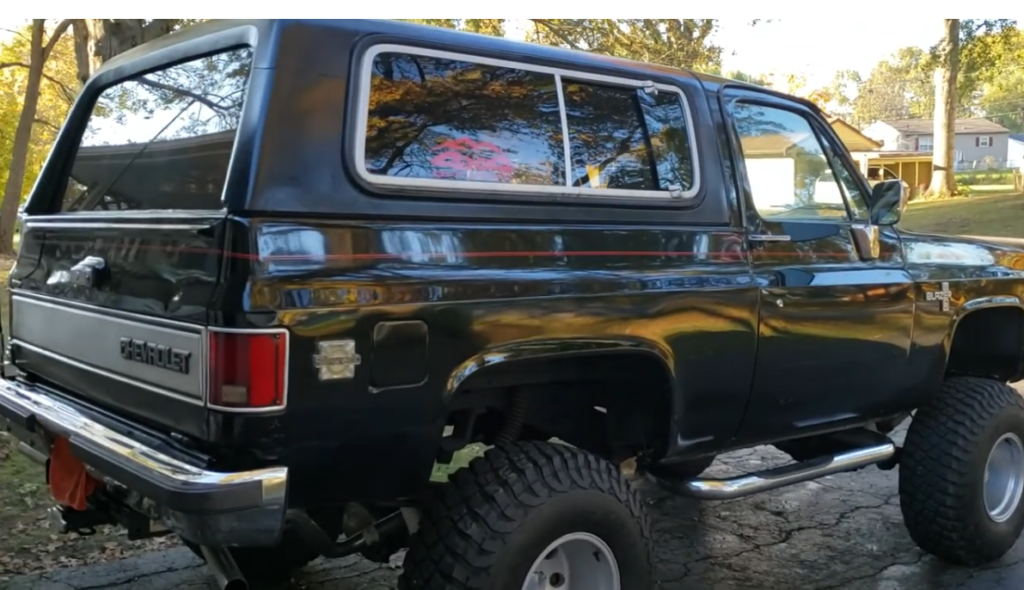
In 1973, Chevrolet introduced the second generation of the K5 Blazer, marking one of the most significant updates in the model’s history. While the first generation had earned praise for its rugged simplicity, Chevrolet recognized that SUV buyers were beginning to expect greater comfort, improved handling, and more refined styling. The result was a redesigned K5 Blazer that successfully combined the toughness of a pickup truck with many of the conveniences found in passenger vehicles.
The new body featured sharper lines, a wider stance, and a more spacious cabin that made long-distance travel considerably more comfortable. Engineers improved the suspension system to provide a smoother ride on paved roads without sacrificing the off-road capability that had become the Blazer’s trademark. This balance between comfort and performance helped expand the vehicle’s appeal beyond outdoor enthusiasts to families and everyday drivers.
One notable design change arrived after the 1976 model year. Earlier K5 Blazers featured a fully removable fiberglass roof, but beginning in 1977, Chevrolet redesigned the vehicle with a fixed cab and a removable rear roof section. Although some enthusiasts preferred the original open-air design, the revised roof improved structural rigidity, reduced wind noise, and enhanced passenger safety while still allowing drivers to enjoy an open-air experience.
Inside, the second-generation K5 Blazer received substantial upgrades. Better seating materials, redesigned dashboards, improved heating and air-conditioning systems, and additional convenience features made the SUV feel much more refined. Higher trim levels even included options such as power windows, upgraded sound systems, and premium upholstery, demonstrating Chevrolet’s commitment to making the K5 Blazer suitable for both work and leisure.
The Growing Popularity of Square-Body Chevrolets
The second-generation K5 Blazer became part of Chevrolet’s famous “Square Body” truck family, a design that has experienced a remarkable resurgence in popularity over the past decade. The clean, angular styling gives these vehicles a timeless appearance that appeals to both classic truck enthusiasts and younger collectors discovering vintage SUVs for the first time.
The square-body design also made customization easier. Owners frequently added lift kits, oversized tires, aftermarket bumpers, roof racks, winches, and upgraded suspension systems to create highly capable off-road machines. Others preferred factory-correct restorations that preserved the vehicle’s original appearance and mechanical components.
This versatility helped establish the K5 Blazer as one of the most customizable classic SUVs ever produced, contributing significantly to its enduring popularity.
K5 Blazer 1980: Refinement Meets Rugged Performance
The K5 Blazer 1980 represents an important milestone in the model’s evolution. By this time, Chevrolet had spent more than a decade refining the Blazer’s engineering, resulting in a vehicle that offered improved reliability, greater comfort, and better overall performance while maintaining its legendary off-road capabilities.
The 1980 model featured subtle styling updates, improved interior materials, and refinements to the suspension system that produced a smoother ride both on highways and unpaved roads. Buyers appreciated that the K5 Blazer remained every bit as capable in demanding environments while becoming increasingly enjoyable for everyday driving.
Several engine choices remained available, allowing customers to select the configuration that best suited their needs. Smaller V8 engines provided respectable fuel economy by the standards of the era, while the proven 350 cubic-inch small-block V8 continued to deliver the strong torque required for towing and off-road adventures. Chevrolet also expanded diesel engine availability in certain markets, offering improved fuel efficiency for commercial users and long-distance travelers.
The automatic transmission became increasingly popular during this period, making the K5 Blazer easier to drive in urban environments while still performing effectively on challenging trails. Power steering and power brakes further enhanced driver confidence, particularly when navigating rough terrain or hauling heavy loads.
Today, the 1980 K5 Blazer is highly regarded among enthusiasts because it offers many of the advantages of later models while retaining the classic square-body styling that collectors admire. Restoration projects based on 1980 models are common due to the excellent availability of replacement parts and aftermarket support.
Mechanical Improvements Throughout the 1980s
The 1980s proved to be a decade of continuous mechanical improvement for the K5 Blazer. Chevrolet engineers focused on increasing reliability, improving emissions compliance, and enhancing overall drivability without compromising the SUV’s rugged character.
Electronic ignition systems replaced older components, improving starting performance and reducing maintenance requirements. Suspension refinements delivered better stability during highway travel while preserving the articulation needed for off-road use. Braking systems also benefited from ongoing development, providing more predictable stopping power under a variety of driving conditions.
These updates allowed the K5 Blazer to remain competitive despite increasing competition from newer SUV models entering the marketplace.
Engine Options That Defined the K5 Blazer
One reason the K5 Blazer maintained its popularity throughout its production run was its wide variety of dependable engine options. Chevrolet recognized that different buyers had different priorities, ranging from fuel economy to towing capability.
Early models offered durable inline-six engines that provided respectable performance with lower operating costs. However, most buyers gravitated toward Chevrolet’s legendary small-block V8 engines, particularly the 350 cubic-inch version. This engine earned a reputation for exceptional durability, abundant torque, and remarkable ease of maintenance.
As emissions regulations evolved during the late 1970s and 1980s, Chevrolet refined these engines with improved carburetion and eventually fuel injection technology. These advancements increased reliability, improved cold-weather starting, and delivered smoother overall performance.
Diesel-powered K5 Blazers also developed a loyal following. The available 6.2-liter Detroit Diesel V8 produced substantial low-end torque, making it particularly well suited for towing, commercial applications, and extended highway travel. Many military variants also utilized diesel engines because of their durability and fuel efficiency.
Today, engine swaps remain common within the K5 Blazer community. While some owners preserve factory-original drivetrains, others install modern Chevrolet LS-series V8 engines to combine classic styling with contemporary performance and reliability.
Off-Road Capability That Earned Legendary Status
Few vintage SUVs have earned the off-road reputation enjoyed by the K5 Blazer. From rocky mountain trails to muddy forest roads and deep snow, the Blazer consistently demonstrated outstanding capability in demanding environments.
Its strong ladder-frame chassis formed the foundation of this reputation. Unlike many modern unibody SUVs, the K5 Blazer’s truck-based construction allowed it to withstand years of heavy use without compromising structural integrity. Solid front and rear axles provided excellent durability and impressive articulation over uneven terrain.
The available four-wheel-drive system allowed drivers to confidently tackle obstacles that would stop many ordinary vehicles. Generous ground clearance reduced the risk of underbody damage, while short overhangs improved approach and departure angles during technical off-road driving.
Another major advantage was mechanical simplicity. The K5 Blazer’s straightforward engineering meant that repairs could often be performed using basic hand tools, making it especially attractive for overland travelers and remote-area adventurers.
The aftermarket industry further enhanced the Blazer’s off-road potential. Lift kits, locking differentials, upgraded shocks, heavy-duty axles, skid plates, recovery equipment, and oversized tires transformed already capable vehicles into formidable trail machines. Even decades after production ended, manufacturers continue producing new performance parts specifically for the K5 Blazer platform.
K5 Blazer 1990: Modern Features in a Classic Package
By the time the K5 Blazer 1990 reached dealerships, Chevrolet had successfully transformed the once-basic utility vehicle into a much more refined full-size SUV. While the exterior retained the iconic square-body styling that enthusiasts loved, numerous technological improvements made the driving experience noticeably more comfortable and reliable.
One of the most significant upgrades was the widespread adoption of electronic fuel injection on the 5.7-liter V8 engine. Compared with earlier carbureted models, fuel injection provided quicker starts, smoother acceleration, improved fuel efficiency, and lower emissions. Drivers also appreciated the reduced maintenance requirements and increased dependability in varying weather conditions.
The interior reflected changing consumer expectations as well. Power windows, power door locks, cruise control, upgraded audio systems, air conditioning, and more supportive seating transformed the K5 Blazer into a vehicle capable of handling long road trips with ease. Improved sound insulation reduced cabin noise, while refinements to the suspension created a smoother highway ride without sacrificing off-road performance.
Many enthusiasts consider the 1989 through 1991 models to represent the ideal balance between classic styling and modern usability. These later K5 Blazers offer the timeless appearance of the square-body era combined with mechanical improvements that make them practical for regular driving even today.
K5 Blazer for Sale: What Buyers Should Know
Finding a K5 Blazer for sale has become increasingly competitive as the vehicle’s popularity continues to grow among collectors and classic SUV enthusiasts. Unlike a decade ago, when many examples could be found at affordable prices, today’s market reflects the K5 Blazer’s status as one of America’s most desirable vintage four-wheel-drive vehicles. Whether buyers are looking for a fully restored showpiece or a project vehicle ready for customization, careful research is essential before making a purchase.
Many K5 Blazers available today have undergone extensive restorations, while others remain largely original. Restored models often feature rebuilt engines, upgraded suspension systems, fresh paint, refurbished interiors, and modern conveniences such as electronic fuel injection or air conditioning. Original, numbers-matching examples are especially valuable because collectors appreciate factory authenticity and historical accuracy.
Project vehicles also remain widely available, although they require careful inspection. Rust is one of the most significant concerns when evaluating any classic K5 Blazer. Areas such as the floor pans, rocker panels, wheel arches, tailgate, body mounts, and frame rails should receive close attention, as extensive corrosion can dramatically increase restoration costs. Buyers should also examine the condition of the transfer case, differentials, transmission, engine, electrical system, and removable roof components before completing a purchase.
The growing online marketplace has made locating a K5 Blazer easier than ever. Classic vehicle auction websites, collector car dealerships, enthusiast forums, and local classified listings regularly feature examples ranging from affordable restoration projects to museum-quality restorations. Because demand continues to rise, desirable vehicles often sell quickly, particularly those with documented ownership histories and minimal modifications.
Chevy K5 Blazer Price Guide
One of the most common questions prospective buyers ask concerns the Chevy K5 Blazer price. The answer depends on several important factors, including model year, originality, mechanical condition, restoration quality, rarity, and documentation.
Entry-level project vehicles generally occupy the lowest end of the market. These examples often require significant bodywork, mechanical repairs, or complete restorations, making them attractive primarily to experienced enthusiasts willing to invest both time and money. Although these vehicles can initially appear inexpensive, restoration expenses frequently exceed the purchase price.
Drivers in solid mechanical condition with attractive cosmetic presentation command considerably higher prices. These Blazers offer a balance between affordability and usability, allowing owners to enjoy classic SUV ownership without undertaking a full restoration. Such vehicles have become increasingly desirable among enthusiasts seeking weekend cruisers or light off-road vehicles.
Professionally restored K5 Blazers occupy the premium end of the collector market. High-quality restorations featuring original equipment, factory-correct colors, rebuilt drivetrains, and meticulous craftsmanship frequently sell for substantial sums. Rare first-generation models, especially the 1969 through 1972 vehicles with fully removable roofs, often achieve the highest auction prices because of their limited production numbers and historical significance.
Special editions, exceptionally preserved survivor vehicles, and professionally customized builds equipped with modern drivetrains can command even higher values depending on buyer demand. As interest in vintage SUVs continues to expand, many automotive analysts believe well-maintained K5 Blazers will remain desirable collector vehicles for years to come.
Chevy K5 Blazer Hogan: Understanding the Search Term
Among the many online searches related to the K5 Blazer, one keyword that occasionally creates confusion is Chevy K5 Blazer Hogan. Despite its appearance in search engine results, there has never been an official Chevrolet factory model or trim package carrying the Hogan name.
In most cases, this phrase refers to a privately customized K5 Blazer, a dealership listing, a social media build, or an enthusiast’s personalized restoration rather than a production model offered by General Motors. Custom builders frequently assign distinctive names to their restoration projects, and these names sometimes gain popularity within enthusiast communities or online marketplaces.
Because there is no factory-issued Hogan edition, prospective buyers should carefully review vehicle documentation whenever encountering this designation. Authentic factory records, original identification numbers, and restoration paperwork remain the most reliable methods of verifying a K5 Blazer’s originality and historical significance.
Why Collectors Love the K5 Blazer
The K5 Blazer has evolved from a practical utility vehicle into one of the most sought-after collector SUVs in North America. Several factors contribute to its enduring popularity.
Its unmistakable square-body styling immediately distinguishes it from modern sport utility vehicles. Clean lines, muscular proportions, chrome accents, and commanding road presence create a timeless appearance that continues to appeal across multiple generations of enthusiasts.
Mechanical simplicity also plays a major role in its popularity. Unlike many contemporary vehicles filled with complex electronic systems, the K5 Blazer can often be maintained and repaired using conventional tools and readily available replacement parts. This accessibility encourages hobbyists to undertake restoration projects themselves while reducing long-term ownership costs.
The enormous aftermarket industry further strengthens its appeal. Owners can choose from thousands of performance upgrades, restoration components, suspension systems, body panels, interior parts, lighting packages, and drivetrain enhancements. Whether preserving factory originality or building a highly customized off-road machine, enthusiasts have virtually unlimited opportunities to personalize their vehicles.
Perhaps most importantly, the K5 Blazer represents an era of American automotive design characterized by durability, simplicity, and genuine capability. It remains equally comfortable at classic car shows, mountain trails, beach outings, and weekend cruises, demonstrating a versatility that few vintage vehicles can match.
Is the K5 Blazer a Good Investment?
Many automotive collectors now consider the K5 Blazer one of the strongest investments within the classic SUV market. Rising demand, limited availability of rust-free examples, and increasing appreciation for vintage four-wheel-drive vehicles have all contributed to steadily increasing values.
While no collectible vehicle guarantees financial returns, the K5 Blazer possesses several characteristics associated with long-term appreciation. Its historical importance, strong enthusiast community, extensive aftermarket support, and relatively limited production numbers create favorable conditions for sustained collector interest.
Nevertheless, buyers should approach purchases primarily because they appreciate the vehicle itself rather than viewing it solely as a financial asset. Proper maintenance, careful storage, documented service history, and preservation of original components will generally have the greatest influence on future value.
Tips for First-Time Buyers
Purchasing a classic K5 Blazer differs considerably from buying a modern SUV. Prospective owners should prioritize structural condition over cosmetic appearance, as repairing extensive rust often proves significantly more expensive than repainting or replacing interior components.
Whenever possible, buyers should inspect the vehicle personally or hire an experienced classic vehicle inspector. Maintenance records, restoration photographs, ownership history, and matching identification numbers provide valuable insight into a vehicle’s authenticity and condition.
It is also important to establish clear ownership goals before purchasing. Some buyers prefer factory-correct restorations for collector purposes, while others seek modified vehicles equipped with modern engines, upgraded suspensions, and improved braking systems for regular driving. Understanding these priorities helps narrow the search and avoid costly compromises later.
The Lasting Legacy of the Chevrolet K5 Blazer
More than five decades after its introduction, the Chevrolet K5 Blazer continues to symbolize adventure, durability, and American automotive craftsmanship. From the groundbreaking first-generation models with their fully removable roofs to the refined fuel-injected versions produced in the early 1990s, every generation contributed to the Blazer’s legendary reputation.
Its influence extends well beyond the collector community. The K5 Blazer helped shape the evolution of the modern SUV by proving that a vehicle could successfully combine work capability, family practicality, and recreational versatility. Many of today’s full-size sport utility vehicles trace their design philosophy back to the innovations introduced by the original Blazer.
Whether admired as a restored show vehicle, driven across rugged mountain trails, or preserved as part of a private collection, the K5 Blazer continues to inspire enthusiasts around the world. Its enduring popularity demonstrates that exceptional engineering, timeless design, and authentic capability never go out of style.
Frequently Asked Questions
Is the K5 Blazer a good classic SUV to own?
Yes. The K5 Blazer is widely regarded as one of the best classic full-size SUVs because of its rugged construction, reliable V8 engines, strong aftermarket support, and timeless styling. Well-maintained examples can provide years of enjoyable ownership.
What is the most collectible K5 Blazer?
Early first-generation models produced between 1969 and 1972 are generally considered the most collectible, particularly well-preserved or professionally restored examples featuring their original drivetrains and fully removable fiberglass roofs.
How much does a Chevy K5 Blazer cost today?
The Chevy K5 Blazer price varies depending on condition, originality, and model year. Project vehicles can often be found at lower prices, while professionally restored collector-quality examples may sell for well into six figures.
Is the 1990 K5 Blazer reliable?
Yes. The 1990 K5 Blazer is known for improved reliability thanks to fuel injection, refined mechanical systems, and better interior comfort. Many enthusiasts consider it one of the best years for owners seeking a balance between classic styling and modern drivability.
Are replacement parts still available?
Yes. One of the K5 Blazer’s greatest advantages is its extensive aftermarket support. Replacement mechanical parts, body panels, suspension components, interior trim, and performance upgrades remain widely available, making restoration and maintenance considerably easier than for many other classic vehicles.
Conclusion
The Chevrolet K5 Blazer remains one of the most influential and respected SUVs ever built. Its truck-based engineering, legendary off-road capability, powerful engine options, and unmistakable styling have allowed it to transcend generations of automotive enthusiasts. Whether exploring a 1970 K5 Blazer, appreciating the refinements of the K5 Blazer 1980, enjoying the modern improvements of the K5 Blazer 1990, comparing the latest Chevy K5 Blazer price trends, or searching for the perfect K5 Blazer for sale, there is no denying the enduring appeal of this American icon.
As interest in vintage SUVs continues to grow, the K5 Blazer stands as a lasting reminder of an era when vehicles were engineered for durability, versatility, and genuine adventure. Its remarkable legacy ensures that it will remain a prized classic for collectors and off-road enthusiasts for many years to come.









Leave a Reply