
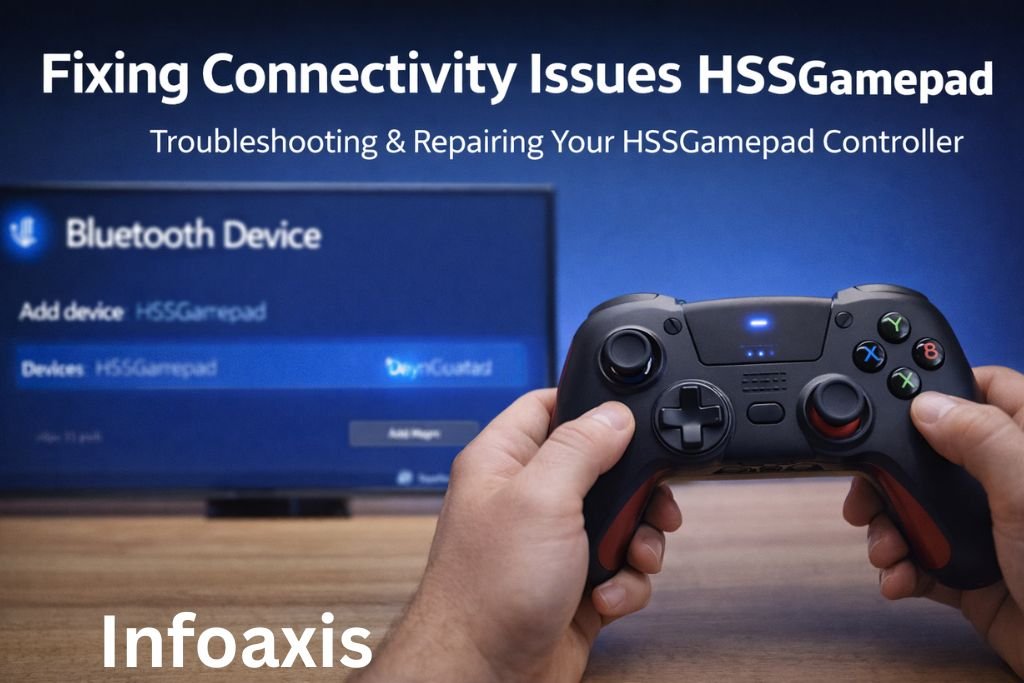
Introduction
There’s nothing more frustrating than your controller acting up right when things get intense in a game. If your HSSGamepad isn’t connecting, keeps disconnecting, or feels laggy—you’re not alone.
“Connectivity issues HSSGamepad” is a common problem gamers face across PC, mobile, and other devices. These issues usually happen because of simple factors like battery level, signal interference, or incorrect settings.
In this guide, you will clearly understand what the problem is, how the controller works, why these issues occur, and how to fix them step by step in a simple way
Quick Troubleshooting Table
This table gives you a quick overview of common problems, their causes, and simple solutions.
| Problem | Likely Cause | Solution |
|---|---|---|
| Not connecting | Pairing issue | Reset and re-pair |
| Disconnecting | Low battery | Charge fully |
| Input lag | Interference | Move closer |
| Not detected | Driver issue | Update drivers |
| Works only with cable | Bluetooth issue | Reduce interference |
What Connectivity Issues HSSGamepad Means
Connectivity issues happen when your controller cannot properly connect or maintain a stable connection with your device.
This can appear in different ways such as the controller not connecting at all, disconnecting during gameplay, delayed input, or not being recognized by the system. Even small connection problems can affect gameplay performance and reduce control accuracy.
How HSSGamepad Connects to Your Device
Understanding how the controller connects helps you identify where the problem is occurring.
Controller to Device
The controller connects to your device using Bluetooth, USB cable, or a wireless dongle. This is the first stage where the signal is transmitted from the controller.
Device to System
Your operating system uses drivers, especially HID drivers, to recognize the controller and process its input signals correctly.
Game Response Layer
The game receives input through system APIs such as XInput or DirectInput and converts it into actions on the screen.
If any of these layers fail, the connection becomes unstable or stops working.
Common Signs of Connectivity Problems
Recognizing the symptoms makes it easier to diagnose the issue.
Key Symptoms
Common signs include failure to pair, sudden disconnections, delayed response, unresponsive buttons, or the device not detecting the controller at all.
Each symptom usually indicates a specific problem, such as battery issues, interference, or driver errors.
Main Causes of Connectivity Issues HSSGamepad
Understanding the causes helps you fix the problem faster and avoid it in the future.
Low Battery Power
A low battery reduces the strength of the wireless signal. Even if the controller turns on, it may not maintain a stable connection, leading to frequent disconnections.
Bluetooth Interference
Bluetooth operates on the 2.4GHz frequency, which is commonly used by many devices. When multiple devices use the same frequency, signal interference occurs. This weakens the connection and causes lag or disconnection.
Incorrect Pairing
If the controller is not paired correctly, it may fail to connect or connect to the wrong device. Old saved connections can also interfere with new pairing attempts.
Outdated Drivers or Firmware
Drivers allow your system to communicate with the controller, while firmware controls the controller’s internal functions. Outdated versions can lead to compatibility issues, detection problems, and unstable connections.
System Restrictions
Many devices use power-saving features that limit background activity. These restrictions can interrupt Bluetooth connections and disconnect your controller during use.
Hardware Issues
Physical damage such as a faulty cable, weak USB port, or internal controller problem can also cause connectivity issues. These issues usually require repair or replacement.
Step-by-Step Fix for Connectivity Issues HSSGamepad
Follow these steps carefully. Most issues are solved within these steps.
Step 1: Perform a Hard Reset
A hard reset clears temporary errors and resets the controller’s internal settings. Press and hold the Power and Mode buttons together for about 10 seconds, then restart the controller.
Step 2: Re-Pair the Controller
Remove the controller from your Bluetooth settings, restart your device, and pair it again. This removes old connection data and creates a fresh connection.
Step 3: Charge the Controller Fully
Ensure the controller is fully charged before use. A stable power supply is necessary for a strong and consistent connection.
Step 4: Reduce Interference
Keep your controller close to your device and reduce nearby wireless signals. Turning off unused Bluetooth devices and staying away from routers can improve connection stability.
Step 5: Update Firmware and Drivers
Updating firmware and drivers ensures compatibility with your device. This step fixes many hidden issues related to connection and performance.
Step 6: Adjust Device Settings
Disable battery optimization and allow background activity for Bluetooth-related apps. This prevents the system from interrupting the connection.
Step 7: Use a Wired Connection
If wireless issues continue, switching to a wired connection can provide a stable and low-latency experience. This is especially useful for competitive gaming.
Step 8: Test on Another Device
Testing on another device helps determine whether the issue is with the controller or your system. This step is useful for identifying hardware problems.
Advanced Fixes for Persistent Problems
If basic troubleshooting does not solve the issue, try these advanced solutions.
Reinstall Bluetooth Drivers
Reinstalling drivers removes corrupted files and resets the connection system, which can fix deeper software issues.
Use a Better Bluetooth Adapter
A higher-quality Bluetooth adapter provides stronger signal strength and better stability, especially on PCs.
Change Power Settings
Disable power-saving options that automatically turn off Bluetooth devices. This ensures a continuous connection during use.
Advanced Technical Insights (Why This Happens)
Understanding the technical side helps you prevent issues more effectively.
Latency Explained
Different connection types have different response times. Wired connections are the fastest, while Bluetooth connections may have slight delays. Higher latency results in slower response during gameplay.
Packet Loss
Wireless communication sends data in small packets. Interference can cause packet loss, which leads to lag, delays, or sudden disconnections.
Driver Chain (PC)
The controller sends input signals to your device, the system processes them through drivers, and the game responds accordingly. If any part of this chain fails, connectivity issues occur.
How to Prevent Connectivity Issues in the Future
Good Habits
Keeping your controller charged, updating software regularly, avoiding crowded wireless environments, and using quality accessories can prevent most connectivity issues. These habits improve long-term performance and stability.
When to Seek Professional Help
You should consider professional help if the controller fails to work on multiple devices, shows physical damage, or does not respond after all troubleshooting steps. In such cases, repair or replacement may be necessary.
Conclusion
Connectivity issues with HSSGamepad are usually caused by simple factors like low battery, interference, or outdated software. These problems can be solved by following a clear and structured approach.
Start with a reset, reconnect properly, update your system, and adjust settings. Understanding how the controller works will help you fix issues faster and prevent them in the future.
If you still face problems or need expert assistance, you can consult Info Access for further guidance and support.
Read More : UploadArticle.com Authors
Read More : UploadArticle .com











Leave a Reply